

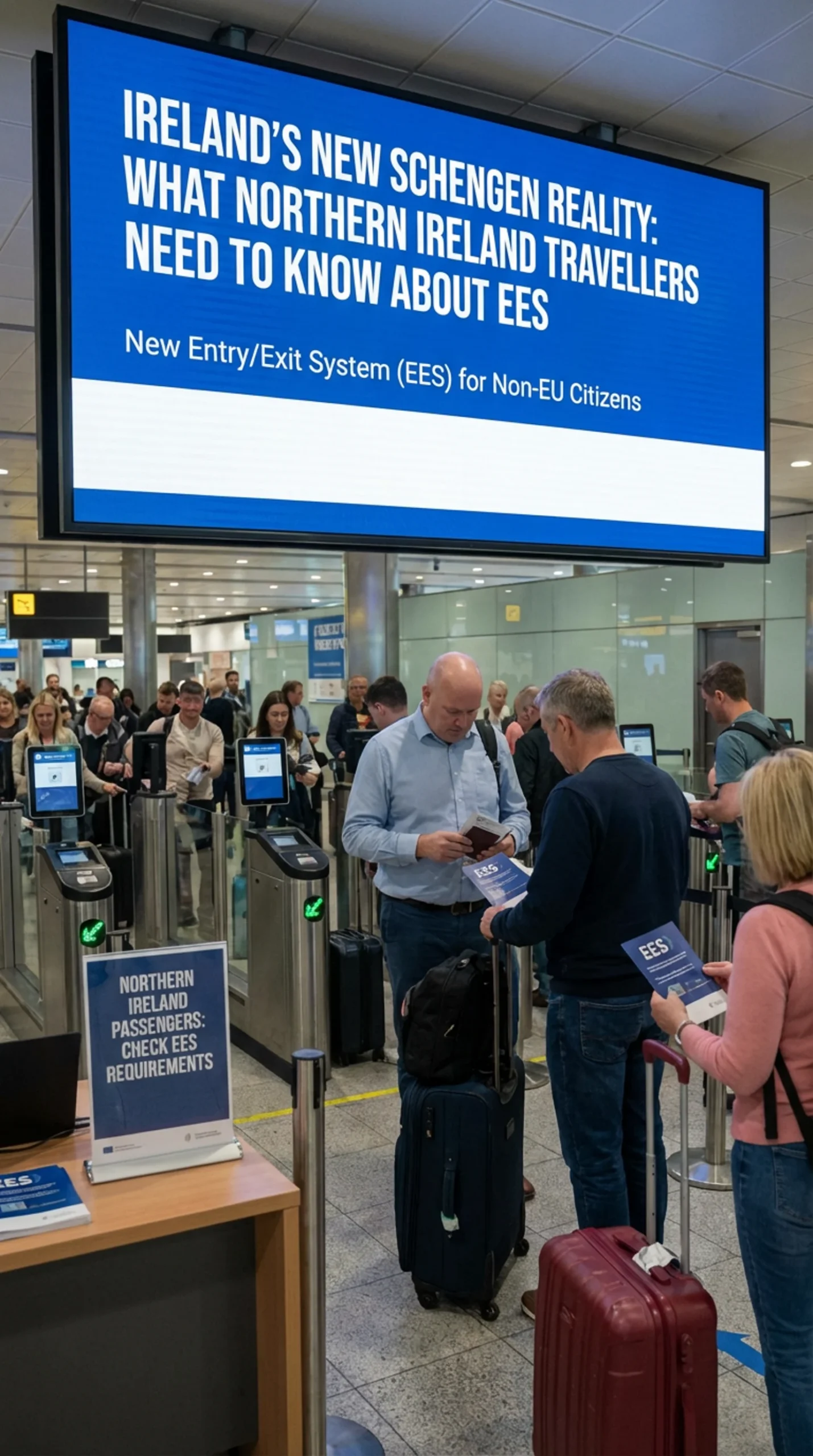
 Ireland’s New Schengen Reality: What Northern Ireland Travellers Need to Know About EES
If you’re used to heading down the A1 or M1 to Dublin Airport for your sunshine break or city weekend, your next trip into mainland Europe could look a little different.
From 10th April 2026, the EU’s new Entry/Exit System (EES) will become fully mandatory at Schengen external borders, and while Ireland itself is outside Schengen, anyone travelling from Northern Ireland or via Dublin into Europe will feel the knock‑on effects.
Here’s what NI‑based travellers need to know.
What is EES?
Understanding Ireland’s New Schengen Reality: What Northern Ireland Travellers Need to Know About EES
The Entry/Exit System is a new digital border control for non‑EU nationals entering or leaving the Schengen Area.
Instead of just a passport stamp, EES:
- Records each crossing electronically
- Captures fingerprints and a facial image at the first Schengen entry
- Tracks entries, exits and refusals of entry
VisaHQ notes that EES moved to 100% registration on 31 March 2026, and by 10 April 2026 traditional passport stamping will disappear across the 29‑state Schengen Area.
Ireland isn’t in Schengen – so why does this matter?
Ireland is not part of Schengen and is not in the EES scheme. Immigration at Dublin, Shannon and Cork stays as it is: a standard Irish passport check and stamp, no EU biometrics.
However, many people from Northern Ireland:
- Drive or take the bus/coach to Dublin Airport, then
- Fly from Dublin straight into a Schengen country (Spain, Portugal, France, Italy, etc.).
Under EES, this is what changes:
- You do not use EES when you cross the land border or when you go through Irish controls at Dublin.
- You do use EES the first time you arrive in a Schengen airport from Dublin – for example, when your Dublin flight lands in Paris, Frankfurt or Madrid. That’s where your biometrics are taken and your first EES file is created. vis
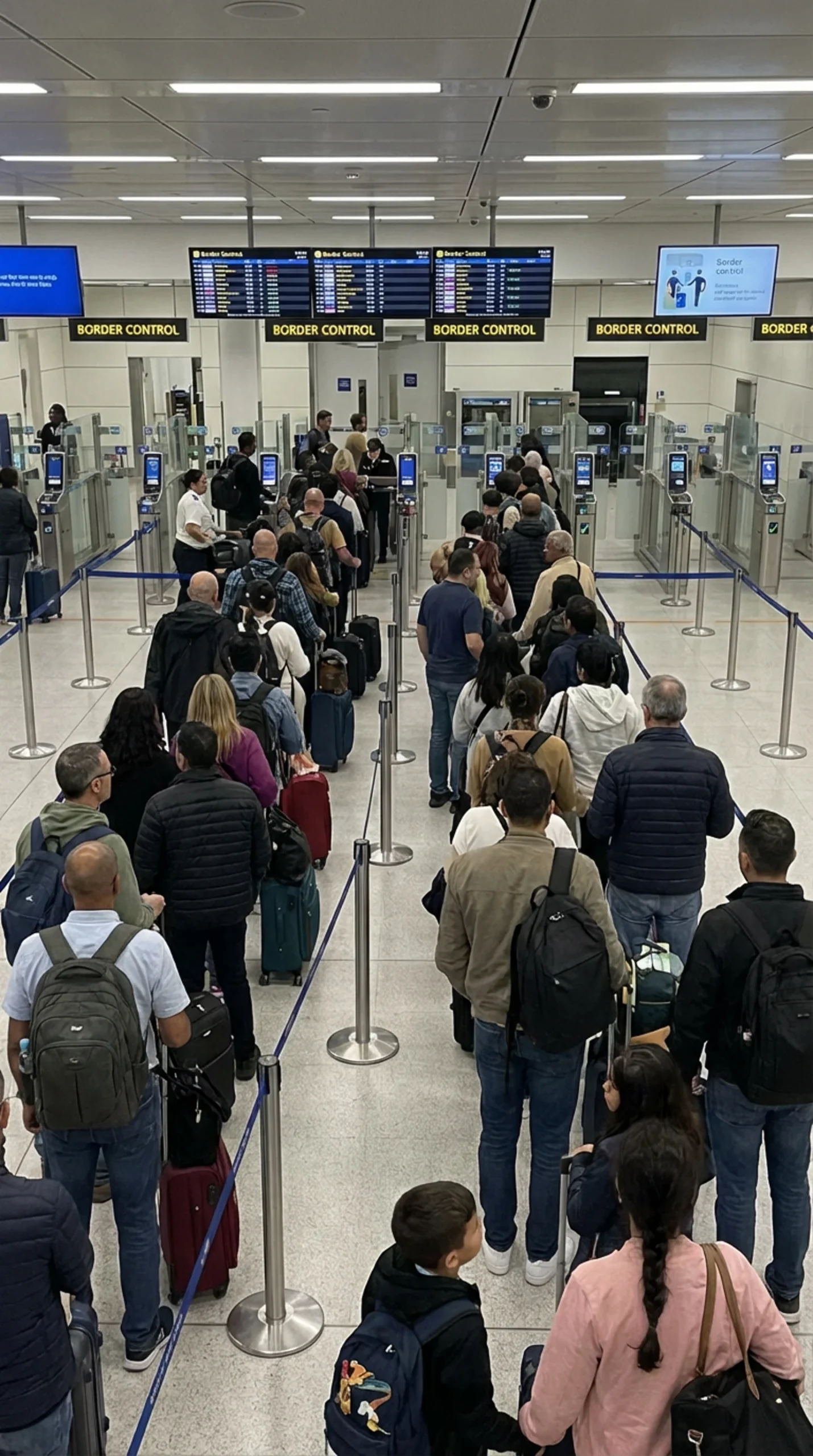 Expect queues at your first Schengen airport
Airlines and airports across Europe are warning of longer waits as EES beds in:
- VisaHQ reports that carriers are bracing for up to two‑hour queues at peak times, while extra kiosks are being installed and border staff are being trained.
- Irish long‑haul and connecting travellers are a particular focus, because many will hit EES for the first time after entering Europe via Dublin.
Once your fingerprints and facial image are captured at that first Schengen border, later trips should be quicker – but only if airports have enough kiosks and staff in place.
Practical tips for NI travellers via Dublin
If you’re travelling from Northern Ireland to Europe using Dublin Airport, here’s how to prepare:
- Allow more time at your destination airport
For routes like:
- Newry/Lisburn/Belfast → drive/coach to Dublin Airport → flight to Malaga / Faro / Alicante / Paris / Rome,
Your EES interaction occurs when you arrive at a Schengen airport.
- On your first trip after early 10th April 2026, build in extra time on arrival – expect the initial registration to be slower.
- If you’re changing planes again inside Schengen (e.g. Dublin–Amsterdam–Vienna), be particularly cautious with tight connections.
Airlines and travel managers are already reviewing connection times, taking expected queues into account.
- Make sure your passport is biometric
EES is designed around biometric passports:
- Older, non‑biometric passports may not work with self‑service kiosks, forcing you into slower manual lanes.
- VisaHQ notes that many companies are updating their travel policies to require biometric passports for staff likely to travel into Schengen.
If your passport is near renewal, it’s sensible to update it before a big European trip.
- Expect the first crossing to take longer
Your first EES enrolment will involve:
- Scanning your passport
- Taking a facial image
- Capturing fingerprints
Once that’s complete, future Schengen trips from Dublin should involve a quicker verification rather than full re‑enrolment – though this will depend on how well your arrival airport has implemented kiosks and staffing.
Frequent travellers may even choose to schedule their first EES journey off‑peak so that later business trips run more smoothly.
How Irish airports and airlines are responding
Even though EES doesn’t operate at Irish borders, the aviation industry south of the border is adjusting:
- Dublin Airport Authority is working with Schengen partners to provide clear signage and pre‑departure briefings, so passengers understand what awaits them on arrival.
- Ryanair has updated online check‑in pages with EES reminders.
- Aer Lingus is sending targeted emails to frequent flyers, especially those travelling from North America and likely to connect onward into Schengen.
Irish travel‑tech firms are also working with European partners on mobile pre‑registration apps designed to ease pressure at border gates.
The bottom line for Northern Ireland travellers
For readers planning trips from NI:
- Staying on the island (NI ↔ ROI only):
- EES does not apply at all. Your cross‑border journeys and holidays in the Republic are unchanged.
- Using Dublin as your gateway to Europe (drive/coach to DUB, then flight into Schengen):
- You’ll meet EES at your first Schengen airport, not in Dublin.
- Allow extra time on that first trip after April 2026.
- Make sure you travel on a biometric passport.
- Keep an eye on airline emails and airport notices for route‑specific advice.
In the short term, the message from European airports is simple: if you’re heading from Northern Ireland through Dublin into mainland Europe after 1 April, build in some buffer time and be prepared for a slower first arrival.
Once enrolled, your future continental adventures should gradually become smoother as the new system – and the queues – settle down
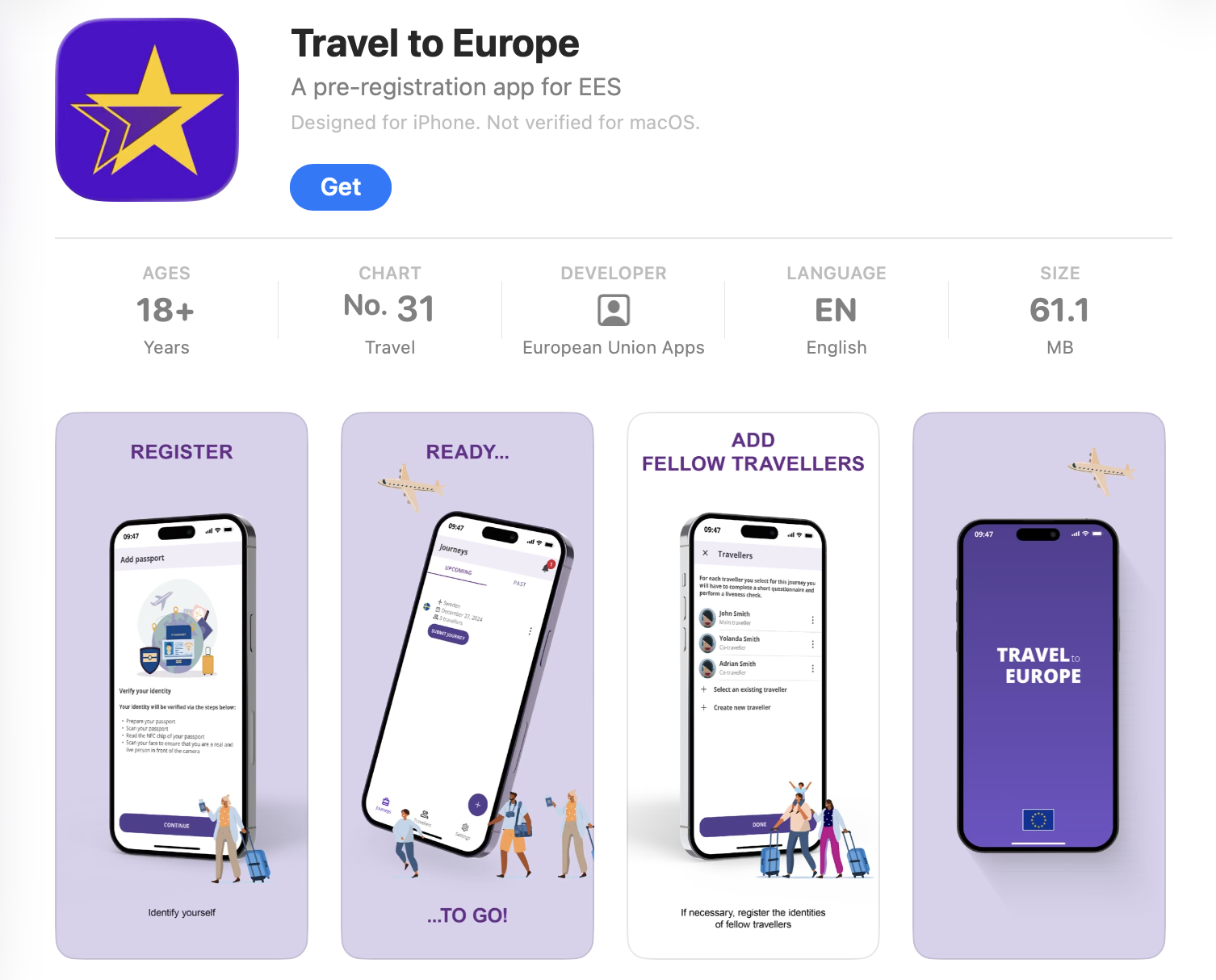
“Travel to Europe” mobile app (official EU app)
The European Commission and Frontex have launched the “Travel to Europe” mobile app for non‑EU travellers subject to the EES. It lets you complete some steps before you reach the border: eu
What it can do:
- Pre‑register passport data and facial image
You can scan your biometric passport and take a selfie up to 72 hours before arriving at an EES border crossing. - Fill in the entry conditions questionnaire in advance
You can answer standard questions (purpose of trip, destination, etc.) before you travel. - Add co‑travellers
Families or groups can add several people to one “journey” in the app.
Where and who can use it:
- It’s designed for non‑EU nationals with biometric passports who must register under the EES.
- As of now, it’s supported in:
- Sweden – passport data, selfie and questionnaire
- Portugal – questionnaire (with potential expansion later)
- Other Schengen countries may adopt it later; features can differ by country.
What it doesn’t do:
- It does not replace border checks – you must still see a border guard.
- It does not avoid fingerprinting – fingerprints still have to be collected in person at the border.
- It may not give you a separate fast‑track queue; it mainly reduces time spent at the counter/kiosk, not time in the line.
Data and privacy:
- Draft journeys you don’t submit are deleted after 7 days.
- Submitted data is only visible to border authorities in the country you’ve selected, and the system is designed to comply with EU data‑protection law (GDPR).
Bottom line
- There is an app – “Travel to Europe” – that can ease the process a bit by pre‑registering data and answering questions in advance.
- It can shorten the processing step, but it does not remove EES obligations or guarantee you’ll avoid queues.
- It only helps where the destination Schengen country has chosen to use it (currently Sweden and Portugal, more possibly to follow).
Please note this is not legal advice, and please check with your relevant border security department.
