
Fortress America: How USA Travel Policies Are Chilling Travel to the United States For decades, the United
Fortress America: How USA Travel Policies Are Chilling Travel to the United States
For decades, the United States sold the world a simple promise: come as a visitor, and you’ll find open skies, open roads, and an open welcome. Now, as the Trump Administration doubles down on immigration enforcement and travel restrictions, that promise is slipping, and so are the visitor numbers.
Behind the abstract talk of “border security” and “visa integrity” lies a quieter crisis:
a tourism slowdown that threatens billions in spending, thousands of jobs, and America’s soft power on the global stage.
The Numbers: A Recovery Stalled
After the collapse of international travel during the COVID-19 pandemic, the U.S. tourist industry spent years clawing its way back.
In 2024, 72.4 million international visitors travelled to the United States—an enormous rebound from just 19.2 million in 2020 but still shy of the 79.4 million who arrived in 2019.
The trajectory seemed clear: steady, if incomplete, recovery.
By 2025, that trajectory has begun to tilt the wrong way. Through May 2025, year-to-date international arrivals are down 2.4% compared with the same period in 2024. Earlier in the spring, that decline was a milder 1.1%. The direction is now unmistakable: instead of accelerating toward pre-pandemic levels, the United States is losing ground.
Drill down into the country breakdowns, and the picture becomes even more complicated. Among the 20 top source markets through May 2025, nine countries are sending more visitors than in 2024—but 11 are sending fewer.
Arrivals from Canada, historically the single largest source of visitors, are down a steep 16.8%. South Korea is down 11.3%. Mexico is a notable outlier, sending 13.9% more visitors year over year, but it’s not enough to offset declines elsewhere.
This isn’t just a tourism story; it’s an economic one.
Travel and tourism accounted for about 3% of U.S. GDP in 2023. A slowdown here doesn’t just hit hotel lobbies and tour buses. It ripples through restaurants, retailers, transportation, and local tax bases from Orlando to Las Vegas to New York.
And the outlook for 2025/26 is not good.
The World Travel and Tourism Council projects that international visitor spending in the United States will be about $169 billion in 2025—roughly $12 billion less than in 2024. One consulting firm, Tourism Economics, has swung from forecasting an 8.8% increase in international visitors to predicting a 9.4% decline instead.
It now expects international visitor spending in 2025 to be 5% lower than in 2024.
In a world racing to capture the post-pandemic travel boom, the United States is on track to be the anomaly: a major destination where international spending actually goes backwards.
The World Cup Effect!

The 2026 men’s World Cup, co‑hosted by the US, Canada and Mexico, is set to be one of the most significant short‑term drivers of travel demand in North America. With 48 teams, 104 matches and 16 host cities spread across three countries and four time zones, the tournament is reshaping flight patterns, accommodation markets and on‑the‑ground mobility planning for both domestic and international travellers.
One of the clearest impacts is on pricing and access. FIFA’s use of dynamic pricing for match tickets has pushed costs sharply higher than in 2022, especially in the lowest categories that traditionally attract younger and budget‑conscious fans.
At the same time, airlines and hotels are raising prices in key hubs such as New York/New Jersey, Los Angeles, Toronto, Seattle, Boston and Mexico City, in anticipation of concentrated demand during match windows.
For many travellers, this will mean having to book earlier, accept longer or multi‑stop itineraries, or shift to secondary airports and more distant accommodation.
The World Cup is also highlighting structural constraints in North American transport infrastructure. Visitors accustomed to host cities with dense public transit will find that several US stadiums are less well served by rail or metro networks, increasing reliance on rental cars, ride‑hailing and event‑specific shuttle services.
Long distances between host cities—such as itineraries that span Toronto, Los Angeles and Seattle within the group stage—are encouraging some fans to choose “clustered” match schedules (for example, staying primarily in the Northeast corridor) rather than trying to follow one team across the continent.
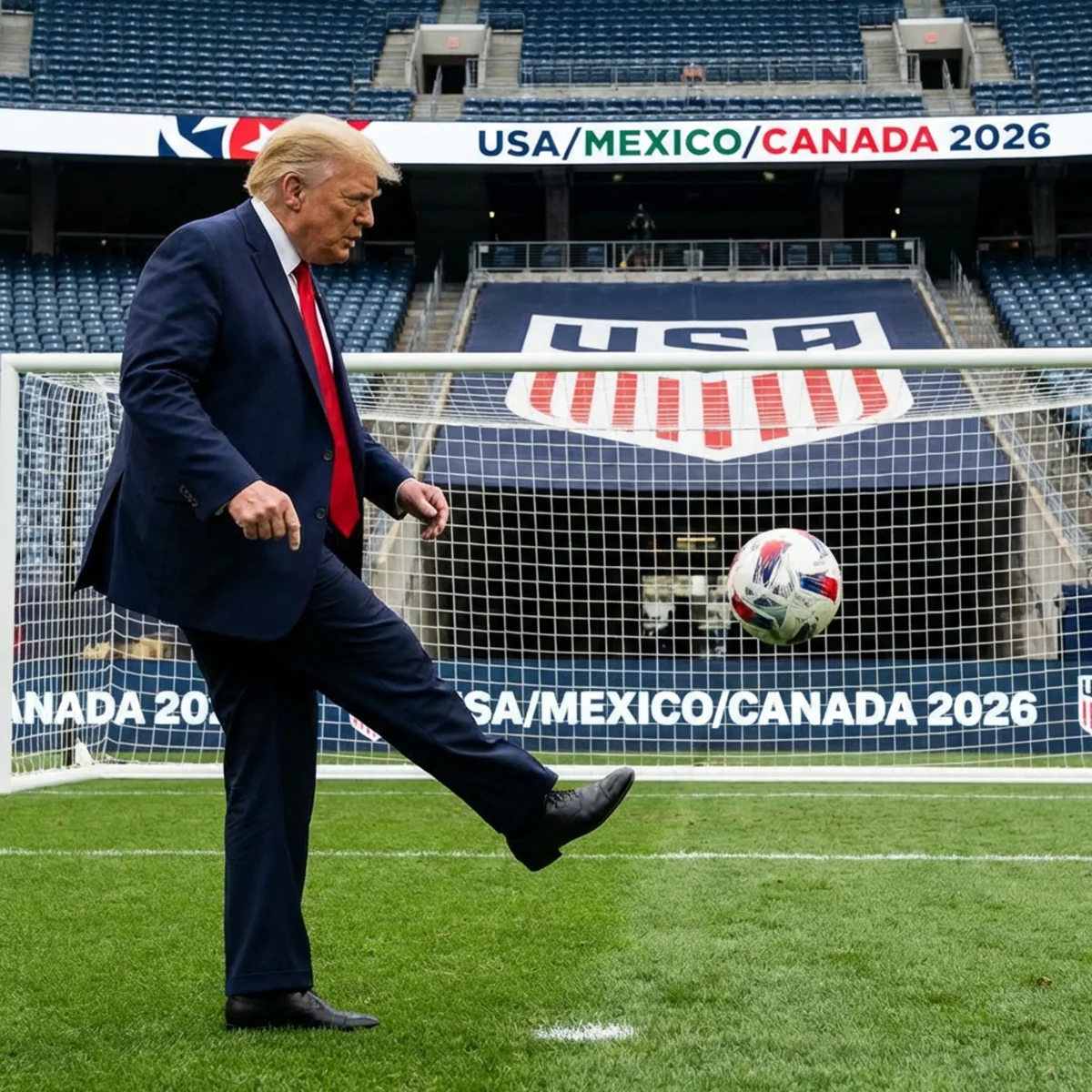
Border and visa policies are another critical factor for international travel trends around the tournament. Canada and Mexico remain relatively straightforward for many visitors, often requiring only electronic travel authorisations. By contrast, the US has tightened entry requirements, including travel bans on certain countries, more complex visa processes for others, and the possibility of more intrusive screening (such as social media checks) for some visitors.
These measures are unlikely to stop overall demand but may influence which source markets grow fastest, how long travellers stay, and whether they base themselves in one co‑host country rather than moving freely between all three.
Finally, the World Cup underscores the growing role of politics in travel decisions. High‑profile debates around ticket affordability, fan surveillance, and the broader policies of the US administration are already part of the narrative around 2026.
While most committed supporters will still travel, there are indications that some fan groups will adjust their plans—spending more time in cities and countries where they feel more welcome or turning the event into a broader North American trip that balances matches with leisure travel in nearby regions.
For the wider US travel market, the tournament is both a stress test and an opportunity: a chance to attract first‑time visitors, showcase lesser‑known cities, and stimulate investment in transport and visitor infrastructure—but also a moment when high prices, long distances and policy uncertainty could deter more price‑sensitive or risk‑averse travellers.