

 Travel expert warns holidaymakers about the 4-tap scam hitting airports, hotels and booking inboxes this summer
With the rise of scams, holidaymakers should be particularly vigilant about the 4-tap scam hitting airports, which can lead to significant financial loss.
QR-code fraud, fake booking confirmations and “reservation hijacking” scams are becoming harder for travellers to spot
Holidaymakers are being warned to slow down before scanning QR codes, clicking booking links or entering card details, as travel scams become more convincing ahead of the summer rush.
Travel scams linked to QR codes, fake booking confirmations and “reservation hijacking” are gaining attention across travel media, with The Points Guy warning travellers about “quishing” scams and Reader’s Digest reporting that fake booking confirmations and travel updates are among the scams concerning American travellers this summer.
It is crucial to recognise the signs of the 4-tap scam hitting airports as it becomes more prevalent during peak travel seasons.
Jürgen Himmelmann, travel expert at Global Work & Travel, says the biggest risk is that these scams no longer look obvious.
He said:
“The old idea of a travel scam was someone selling a fake tour on the street. The newer version is much harder to spot because it often looks like normal travel admin.
A QR code in an airport, a hotel payment message, a flight rebooking link or a booking confirmation email can feel completely routine when you are tired, rushing or trying to get online abroad. That is exactly when people make quick decisions.
The scam I would be most alert to this summer is what I call the four-tap scam. You scan, open, enter details and approve payment before you have properly checked who you are paying.”
The 4-tap scam hitting airports can often disguise itself as a legitimate transaction, making it essential to stay aware.
Recent warnings have highlighted fake QR codes being placed over legitimate ones, phishing messages that appear to come from trusted travel brands and scams using real booking details to trick travellers into making payments. Wired recently reported on “reservation hijacking”, where scammers use genuine booking information to make fake payment requests appear more credible.
Jürgen says travellers should watch out for four common scams this summer:
Awareness of the 4-tap scam hitting airports will help ensure travellers do not fall victim to these increasingly clever schemes.
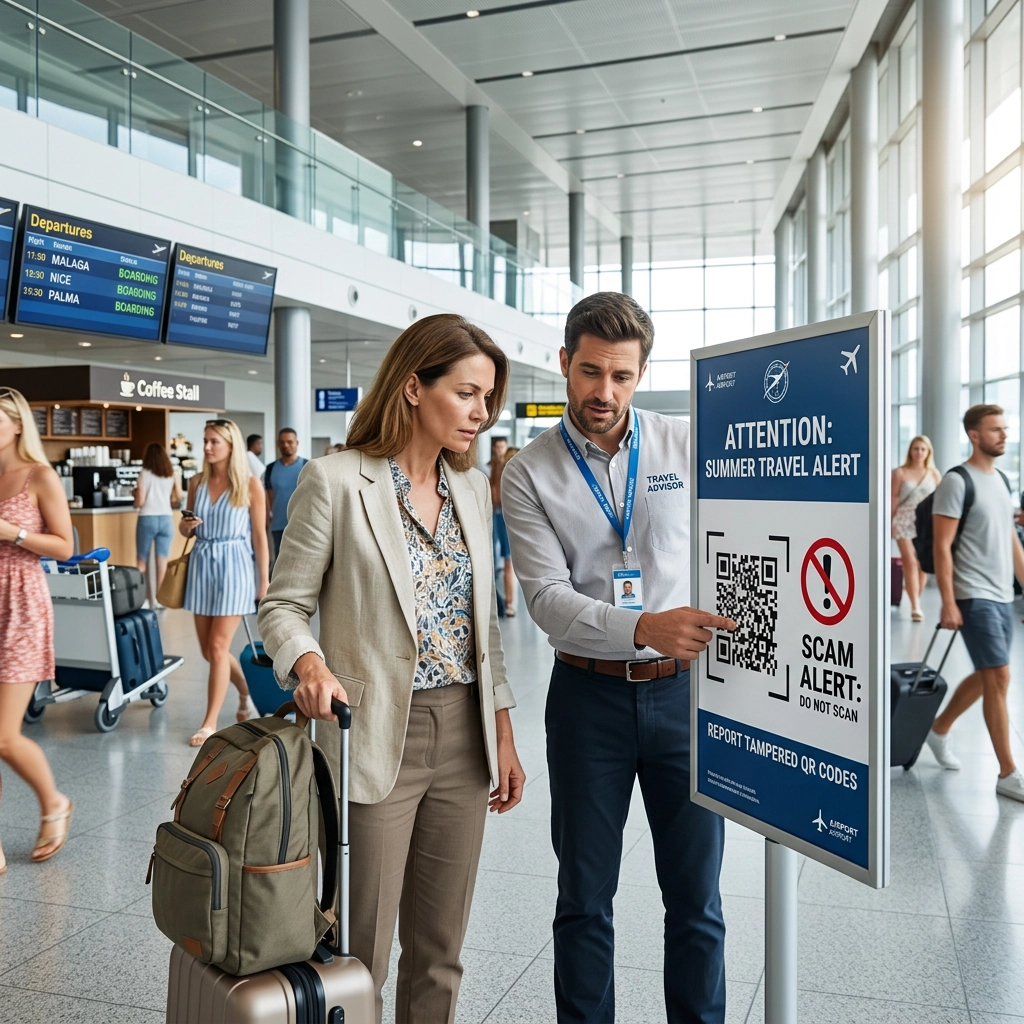
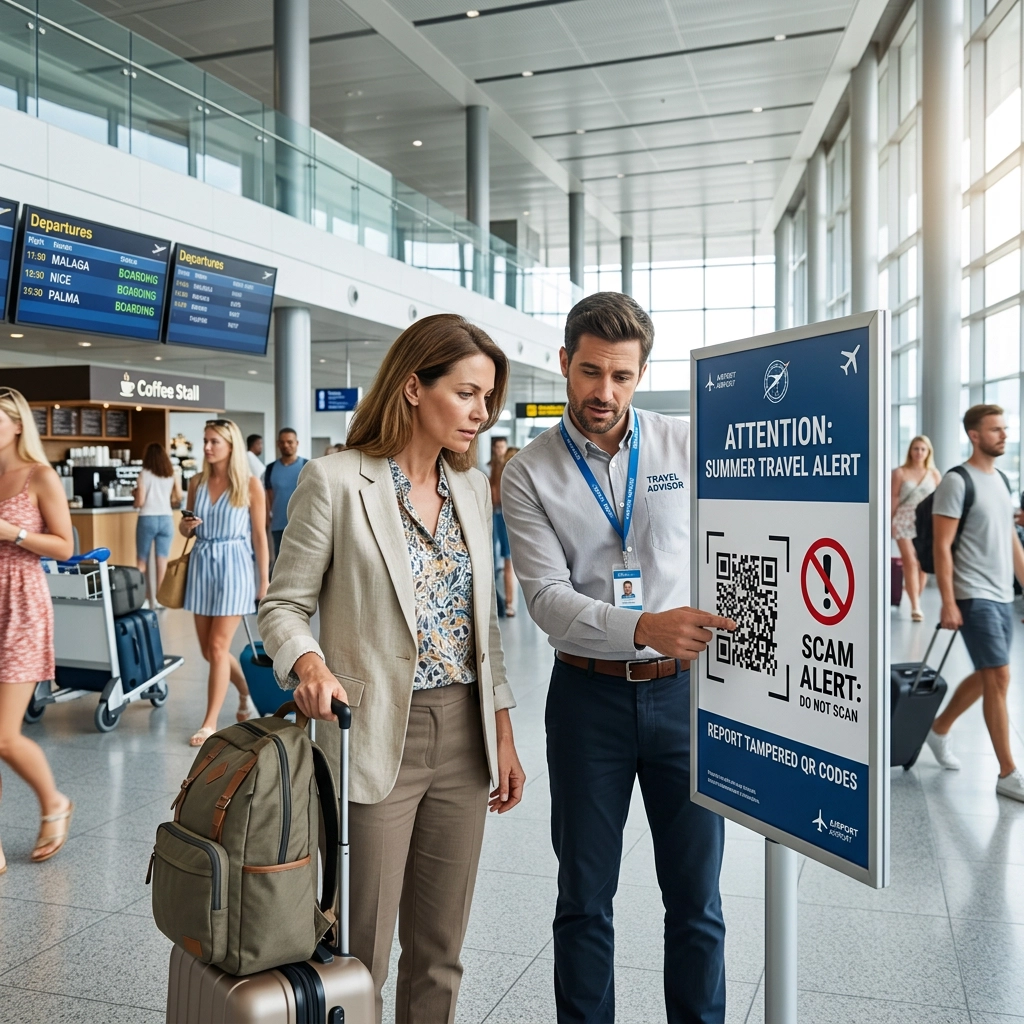
Fake QR codes in airports, hotels and taxi ranks
Scammers can place stickers over genuine QR codes, sending travellers to fake payment pages or login forms.
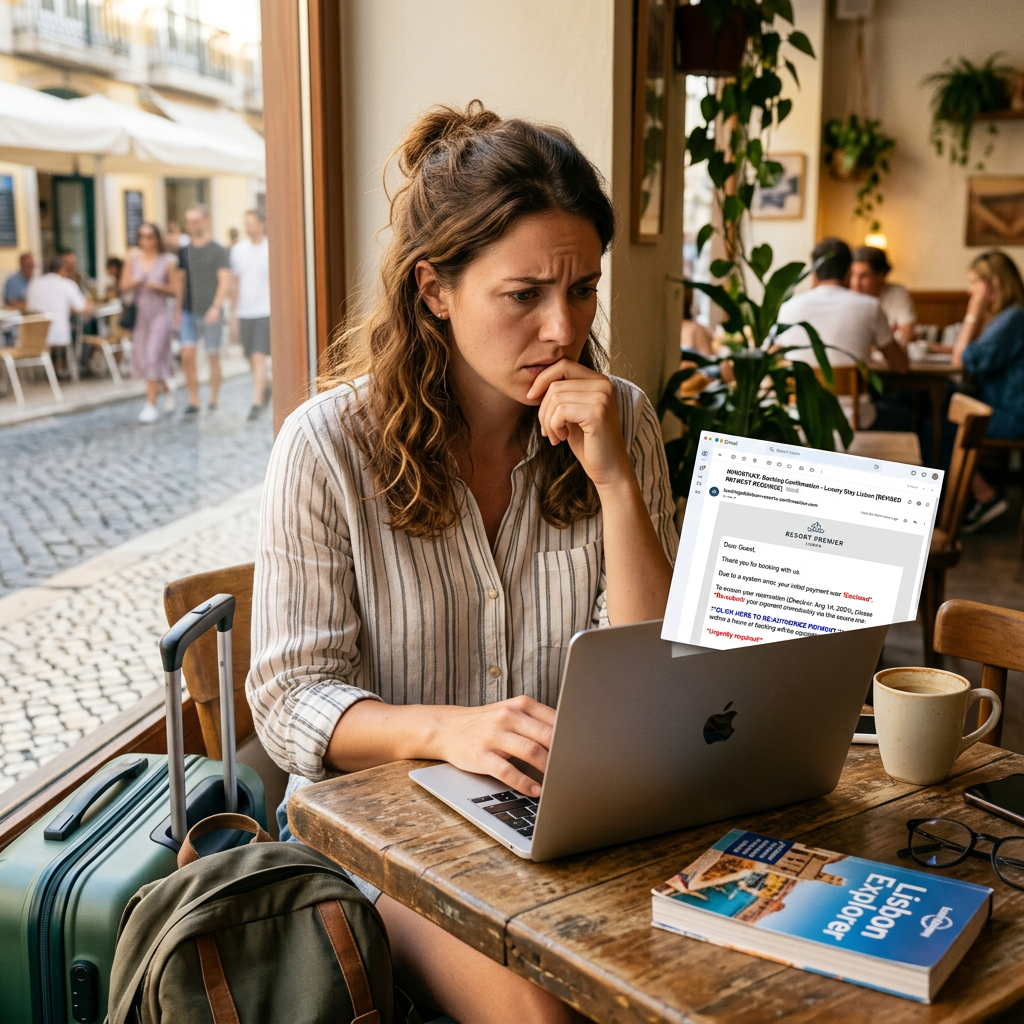
Fake booking confirmation emails
These can look like they are from a hotel, airline, Booking.com, Expedia or another travel platform, but the link directs travellers to a fraudulent payment or verification page.
“Reservation hijacking” messages
These use real details such as your hotel name, travel dates or booking reference to make the scam feel legitimate.
Street-level distraction scams
Solo travellers remain vulnerable to “friendly chat” bar scams, bracelet scams, charm scams and fake donation approaches in busy tourist areas.
Jürgen added:
“The habit that defuses most of these scams is simple: do not act through the link or QR code in front of you. Open the official app, type the website into your browser, or go to the hotel, airline or transport provider directly.
In light of these issues, learning about the 4-tap scam hitting airports is key to safe travels this summer.
If a message says your booking will be cancelled unless you pay now, that is the moment to pause, not panic. Genuine travel companies do not usually need you to make urgent payments through a random link.
Remember, the 4-tap scam hitting airports is designed to create urgency and confusion, so always take a moment to verify.
Travellers should also consider using a virtual card or a travel money card with spending limits, because it reduces the damage if details are compromised. Keep your main debit card away from unfamiliar payment pages while travelling.”
Travel insurance may not always cover money lost through authorised card payments, phishing or scams where the traveller has willingly entered their details, so holidaymakers should check policy wording before they travel.
Jürgen said:
“A lot of people assume travel insurance covers every bad thing that happens on holiday. It does not. If you transfer money to a scammer or enter your card details into a fake site, your first route is usually your bank, not your insurer.
That is why prevention matters. The safest travellers this summer will be the ones who treat every payment link, QR code and urgent booking message as something to verify first.”
Ultimately, holidaymakers must remain alert to the 4-tap scam hitting airports, ensuring they take proper precautions.
