

Beauvais travel guide – NI Travel Magazine
Publication details
Cathédrale de Beauvais
Most Northern Ireland travellers know Beauvais only as the airport with “Paris” in its name. Step 15 minutes beyond the terminals, though, and you reach a compact cathedral city with the tallest Gothic choir ever built, two astronomical clocks, a tapestry heritage and free museums.
Here is how to see it properly, and what to watch out for.
Key facts at a glance
Where | Beauvais city, Oise department, Hauts-de-France region, northern France. It is not part of Paris. |
Distance from Paris | Paris–Beauvais Airport lies roughly 80 km north of Paris, about 2 km north-east of Beauvais.[4] |
By rail from Paris | TER regional trains from Paris Gare du Nord, about 1 hr 15 min.[4][6] |
Station to centre | Beauvais railway station is about 400 m from the town centre.[5] |
Airport to city | Corolis bus line 6 links the airport, the station and the centre in roughly 15–20 minutes.[4][6] |
Headline sight | Cathédrale Saint-Pierre: free entry; 48.5 m-high choir vault. |
Best for | A weekend or a full day trip; a short visit between flights only with a generous gap |
Tourist office | Office de Tourisme Beauvais & Beauvais, 1 rue Beauregard; +33 (0)3 44 15 30 30; contact@visitbeauvais.fr |
Currency and entry | Euro. British passport holders follow Schengen 90-in-180-day rules and the EU Entry/Exit System. |
Why visit Beauvais?
Beauvais is a working town of the Oise department in the Hauts-de-France region, not a Paris suburb and not a museum piece. Its pull is concentrated: one of the most daring buildings of the Middle Ages, a cluster of free or low-cost cultural sites within a few minutes’ walk of each other, and a centuries-old tapestry tradition that is still practised in the town today.
The town holds the national Ville d’art et d’histoire (“town of art and history”) label, awarded by the French Ministry of Culture, which it has carried since 2012. That label funds the heritage interpretation centre now housed in the Quadrilatère arts centre beside the cathedral.
For readers flying from Dublin or Belfast, Beauvais has an obvious practical appeal. Ryanair’s network from Paris–Beauvais Airport is led by Dublin, according to the Paris tourist office.
That makes Beauvais an easy first or last night for a wider French trip, or a self-contained weekend.
Be realistic about scale. Beauvais is a compact provincial town whose centre was largely destroyed by bombing in June 1940, so much of the townscape is post-war reconstruction rather than medieval streets.
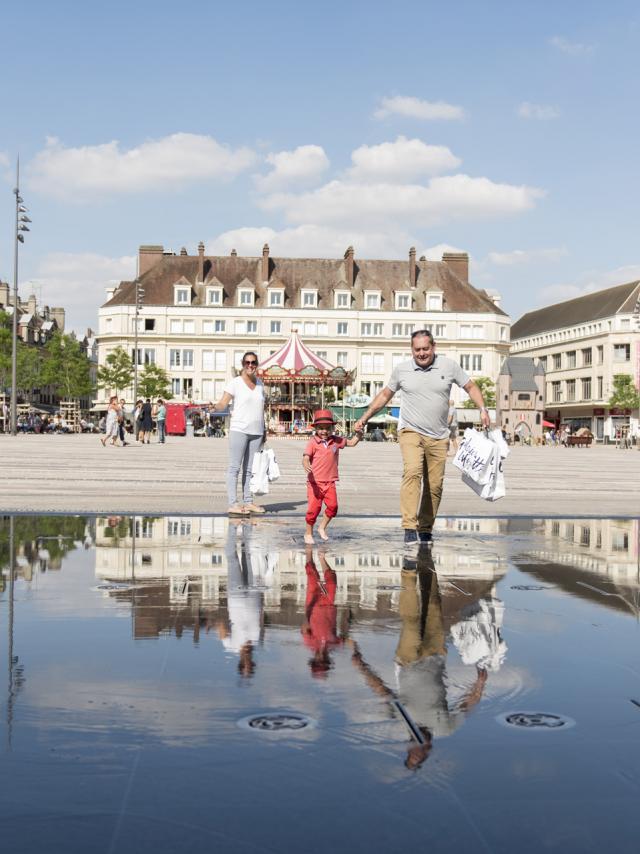
One full day covers the essentials. A weekend lets you add the Maladrerie, a market morning and a countryside excursion at an unhurried pace.
A brief history of Beauvais
Beauvais has around two millennia of urban history. Remains of its Gallo-Roman defensive wall survive in the town centre, and both the Quadrilatère arts centre and the former bishops’ palace were built on or against it.
The town’s Christian story is traditionally traced to Saint Lucien, regarded as its first bishop. A cathedral was built in the second half of the 10th century; part of its nave survives today as Notre-Dame de la Basse-Œuvre, beside the later Gothic building.
In 1225, after a fire at the old cathedral, Bishop Milon de Nanteuil launched a new Gothic cathedral. Its choir partially collapsed in 1284, was rebuilt in the 14th century, and was joined by a Flamboyant (late Gothic) transept in the 16th century.
In 1472, the troops of Charles the Bold, Duke of Burgundy, besieged the town. Local history credits the resistance partly to Jeanne Laisné, known as Jeanne Hachette (“Joan of the hatchet”), who is still commemorated every June and her statue can be found in the main square of the town.
The royal tapestry manufactory was founded in 1664 on the road to Flanders, and Beauvais tapestry became internationally known. The manufactory’s buildings burned in June 1940 when German bombing devastated the town centre. Tapestry weaving was later re-established in Beauvais, where the Manufacture nationale still operates under the Mobilier national.
Beauvais Cathedral
Cathédrale de Beauvais
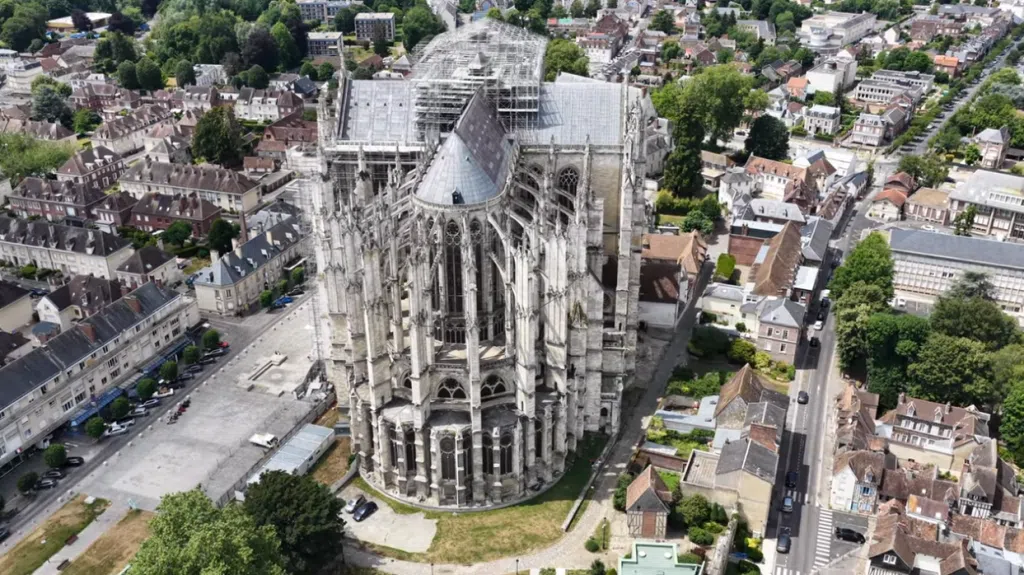
The building’s official name is the Cathédrale Saint-Pierre de Beauvais: Saint Peter’s Cathedral, the seat of the Catholic diocese. What visitors see is not a complete cathedral but an enormous Gothic choir and transept that were never joined to the nave as originally planned.
Why it matters
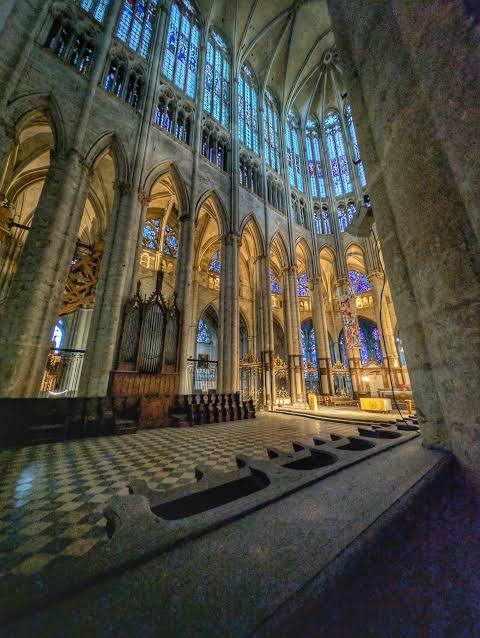
The choir (the eastern arm, around the main altar) rises to 48.5 m beneath its vault, which the cathedral describes as the tallest Gothic choir in the world. To put that precisely: the claim concerns the internal height of the choir vault, not overall building height or floor area.
The building records a 350-year struggle between ambition and structure, I can assure you it’s well worth a visit:
- 1225: construction begins under Bishop Milon de Nanteuil.
- 1272: services are first held in the new choir.
- 28 November 1284: part of the high vaults of the choir collapses; the apse (the rounded east end) survives.
- 1338–1342: the main rebuilding of the choir, with extra intermediate supports.
- 1500–1550: master builder Martin Chambiges and his successors raise the Flamboyant transept.
- 1569: a central lantern tower and timber spire are completed, reaching an estimated 150–153 m.
- 1573: the tower collapses onto the crossing. Repairs absorb the money meant for the nave.
- 1600–1604: one bay of nave is vaulted, then work stops for good.
What to look for inside
- The choir vaults and buttressing. Look up, then step outside to see the flying buttresses (external arched supports) that carry the thrust of the vaults.
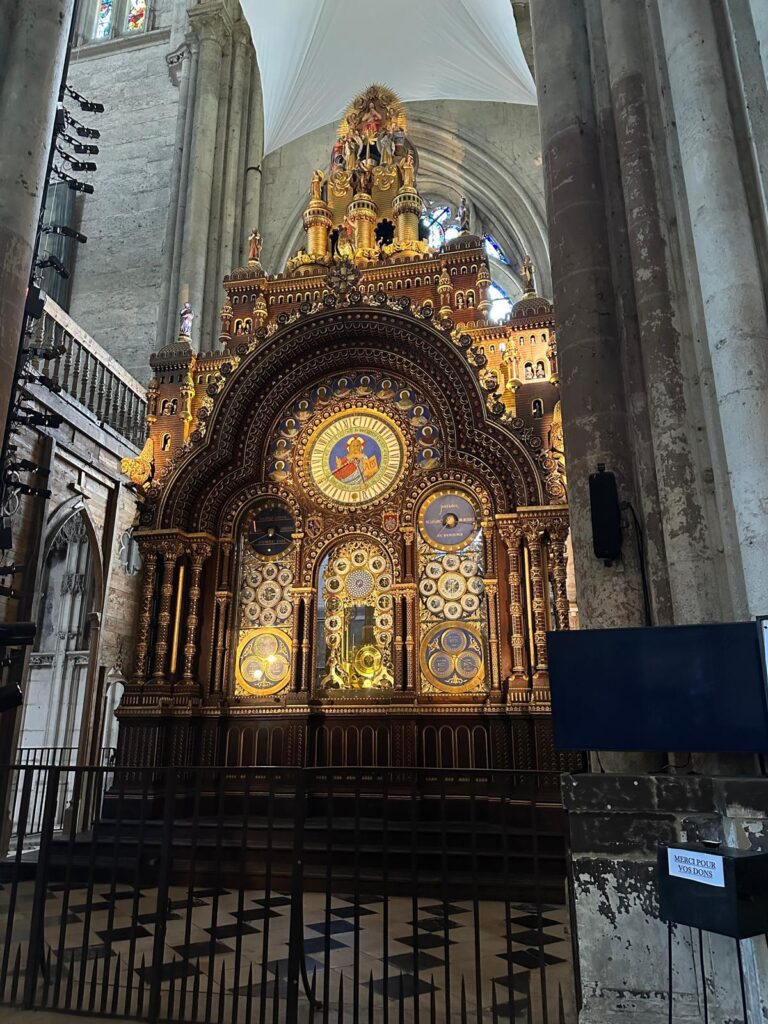
- Two astronomical clocks. One is a medieval chiming clock traditionally linked to Canon Étienne Musique, with parts of its mechanism dating from the 14th century. The other is Auguste-Lucien Vérité’s 19th-century clock, built in 1865–1868 and installed in the north transept in 1876.[1][2]
- The Vérité clock show. The clock stands 12 m high, with about 90,000 parts, 52 dials and 68 automata (moving figures).
- Stained glass. High windows were installed in the 14th-century rebuilding, and the north transept glass dates from the 1530s.
- The Basse-Œuvre. It is entered from inside the cathedral, through the door beneath the great organ.[1]
Restoration and current conditions
The cathedral has been under near-continuous structural watch for decades. Large timber props were installed inside in 1993 to control the movement of the piers; the French State launched a major restoration programme in 2022, and the gradual loosening of the 1993 props began in March 2025.
The current campaign is expected to run to around 2028, so expect scaffolding, fenced areas or temporary closures of parts of the building.
- Entry: free for individual visitors; no booking needed.
- Hours: 1 April–31 October daily 10:00–18:15; 1 November–31 March daily 10:00–12:15 and 14:00–17:15.
- Clock presentation (about 35 min): usually 10:30, 11:30, 14:30, 15:30 and 16:30, with extra sessions at 12:30 and 13:30 from April to September. Adults €5, ages 6–15 €2, under-6s free.
- Audio guide: €5 adults, €2 ages 6–15, in English, French, German, Italian and Spanish.
- Guided tour: €8, at 15:00 on the second Saturday of each month and on request.
- Time needed: 45–60 min for the building; 1 hr 30 min–2 hr with the clock show.
- Contact: Association Beauvais Cathédrale, +33 (0)3 44 48 11 60.[1]
The Vérité clock is privately owned and cared for by the Association Beauvais Cathédrale; the presentation fee helps pay for its maintenance.[1]
A place of worship first
Saint-Pierre is an active cathedral, not a ticketed attraction. Visiting can be restricted or halted during Mass, ceremonies, concerts or works, and visitors are asked to keep quiet and respect reserved areas. Check the mass times page on the cathedral website before travelling. Pets are not admitted, except guide and assistance dogs.
The best things to see and do in Beauvais
Most of the sights below sit within a few minutes’ walk of the cathedral. The Maladrerie is the main exception, in the Voisinlieu district south of the centre, and Gerberoy is a separate countryside trip.
MUDO – Musée de l’Oise
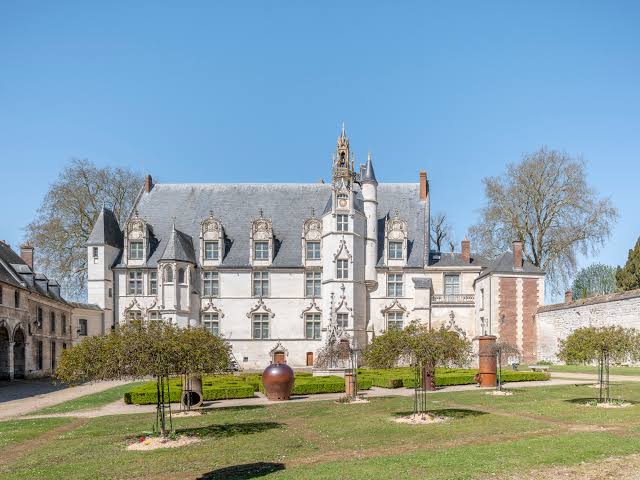
The departmental museum occupies the former palace of the bishop-counts of Beauvais, at the foot of the cathedral. The complex was begun in the 12th century on the Roman ramparts; its fortified gatehouse with two towers dates from the 14th century, and the main residence was rebuilt in the Renaissance. The building became a courthouse in 1846 and was handed to the museum in 1973.
The collection includes nearly 1,000 paintings, with a strong 19th-century section. Entry is free.
The museum closes on Tuesdays and some public holidays. A lift is available. Typical hours listed by the tourist office are 10:00–13:00 and 14:00–18:00, Address: 1 rue du Musée.
 Le Quadrilatère – centre d’art
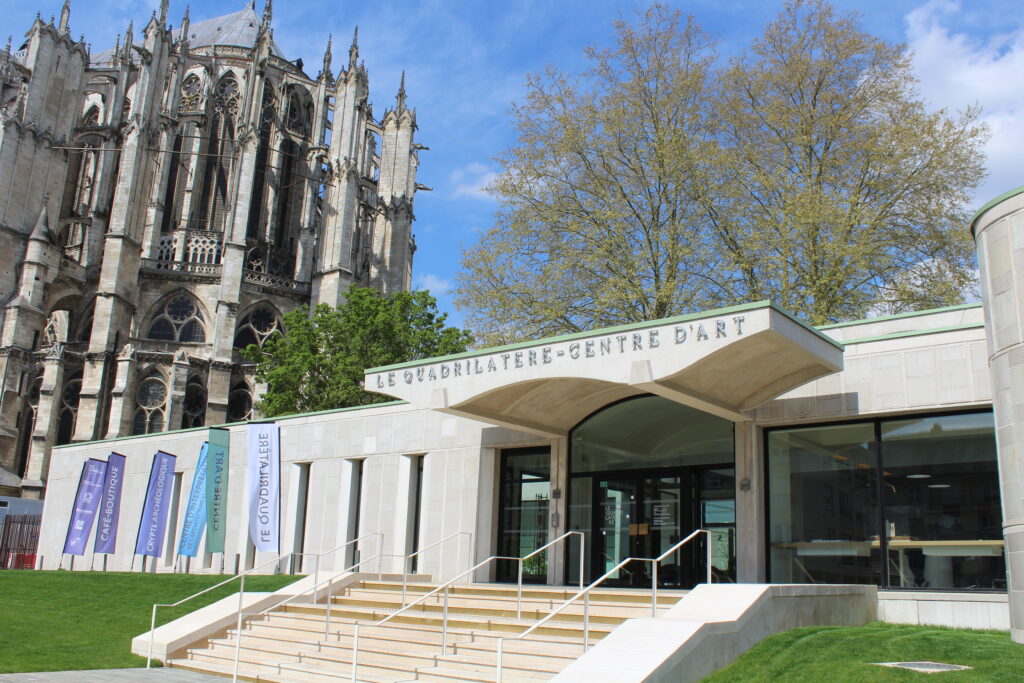
This low, modernist concrete building by architect André Hermant opened in 1976 as the national tapestry gallery, deliberately horizontal against the vertical cathedral. The town took it over in 2013, and after a major restructuring by Chatillon Architects, it reopened in April 2025 as a contemporary art centre
It is worth visiting for two reasons beyond its exhibitions. It contains the town’s heritage interpretation centre (CIAP), covering 2,000 years of local history, and it incorporates remains of the Gallo-Roman wall.
Open Tuesday–Thursday 12:00–18:00, Friday 12:00–19:00, Saturday–Sunday 10:00–18:00; closed Mondays. Exhibitions change, and the centre can close while new programmes are installed, so check the current programme before you go. Address: 22 rue Saint-Pierre.
Église Saint-Étienne
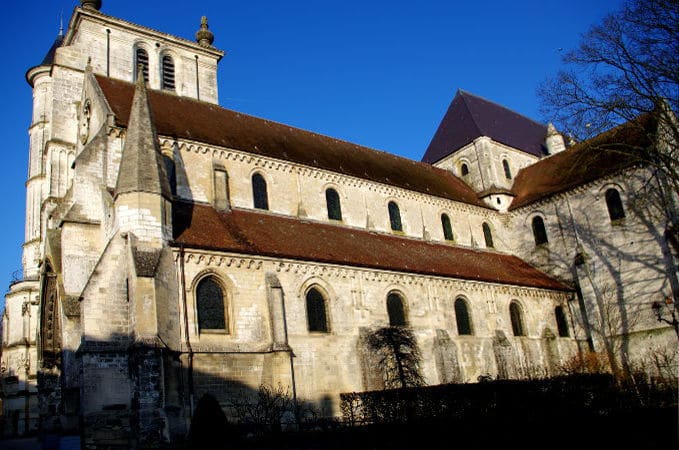
One of the oldest churches in Beauvais, Saint-Étienne is known for its stained glass and the transition it shows from Romanesque to Gothic architecture. Weekend opening, usually Saturday and Sunday 14:00–17:00, with a guided tour (€6) at 15:00 on the second Sunday of the month. Address:
rue de l’Étamine.
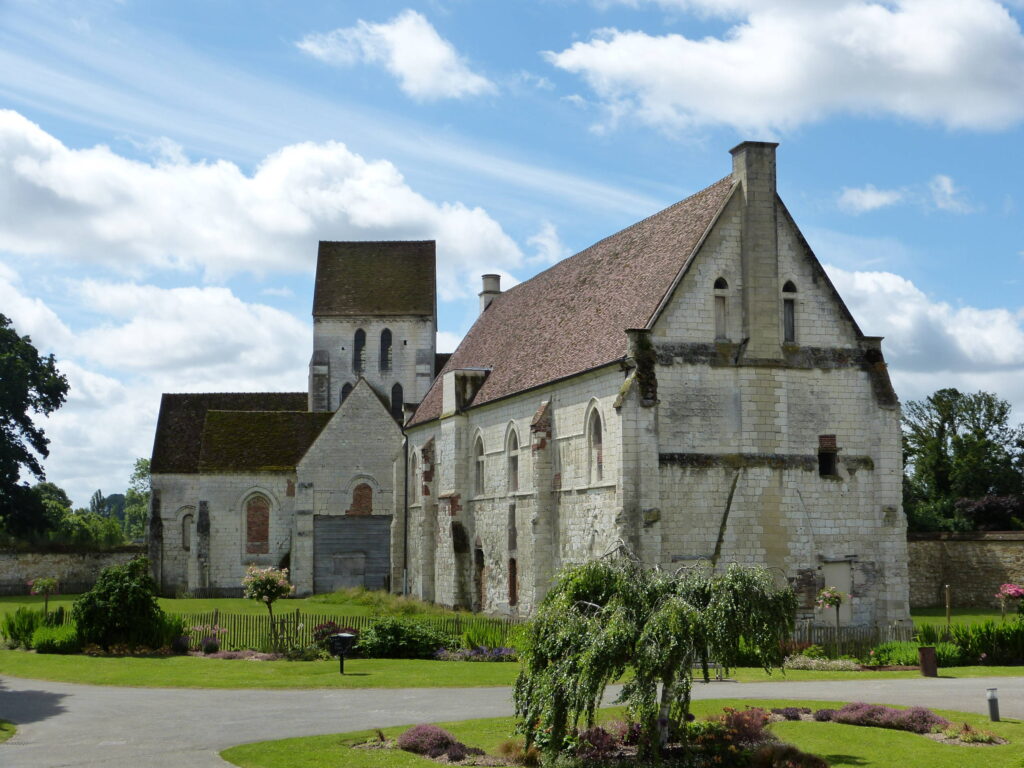
Maladrerie Saint-Lazare
A medieval leper hospital complex with gardens and a large barn, on the southern edge of town at 203 rue de Paris. It is reached by Corolis bus line 4 or Chrono 2 (Sundays: Chrono 2 only), alighting at “Maladrerie”.
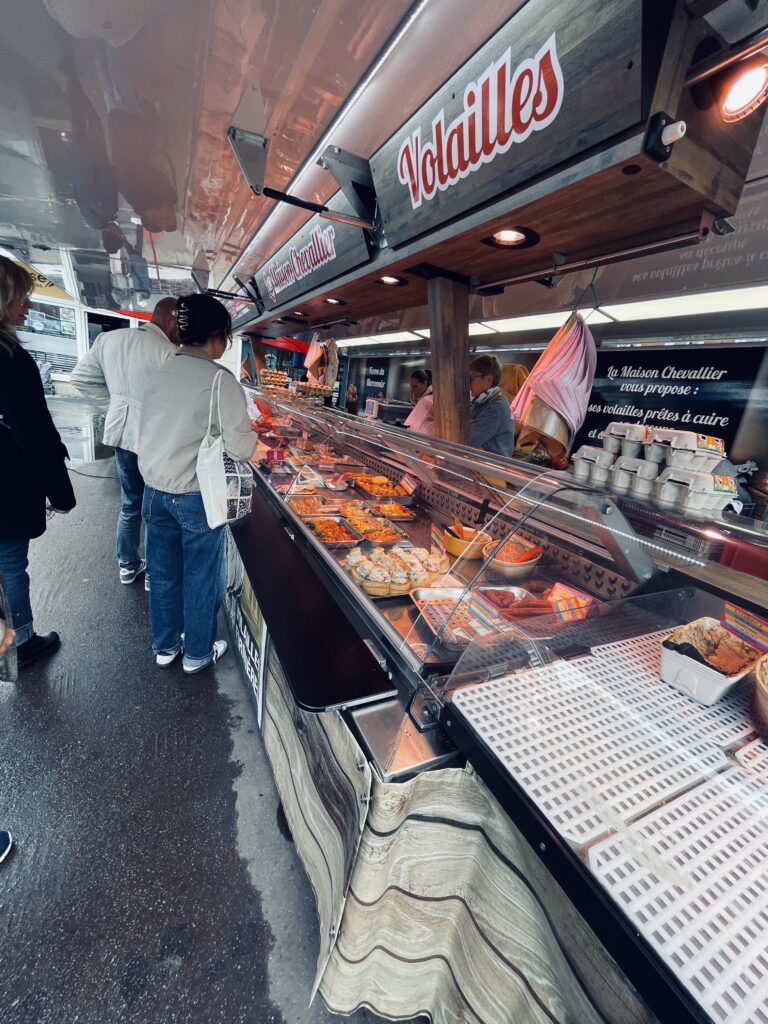
Streets, squares and markets
The Place Jeanne-Hachette, with its statue of the town’s heroine, is the civic heart of Beauvais and the setting for its main festivals. The town hall and a largely pedestrianised shopping area surround it.
On Wednesday and Saturday mornings (08:00–13:00) there is a food market on the Place des Halles and a clothing market on the Place Jeanne-Hachette. On Sunday mornings, a farmers’ market runs in the covered hall at Saint-Paul, outside the centre.
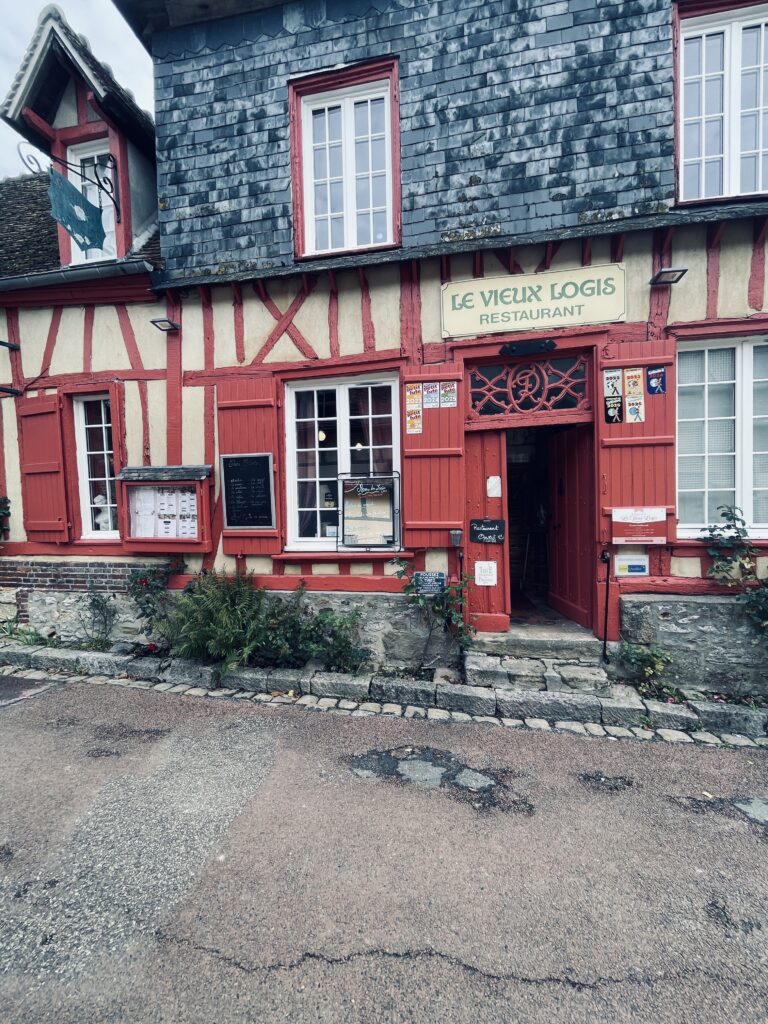 Nearby: Gerberoy
Gerberoy is a tiny hilltop village of half-timbered houses in the Pays de Bray, listed among the Plus Beaux Villages de France (“most beautiful villages of France”). It is a separate village about a 30-minute drive from Beauvais. Public transport is limited, so treat it as a car or taxi excursion, and confirm return arrangements before you set off.
YOU MUST VISIT THIS RESTAURANT.
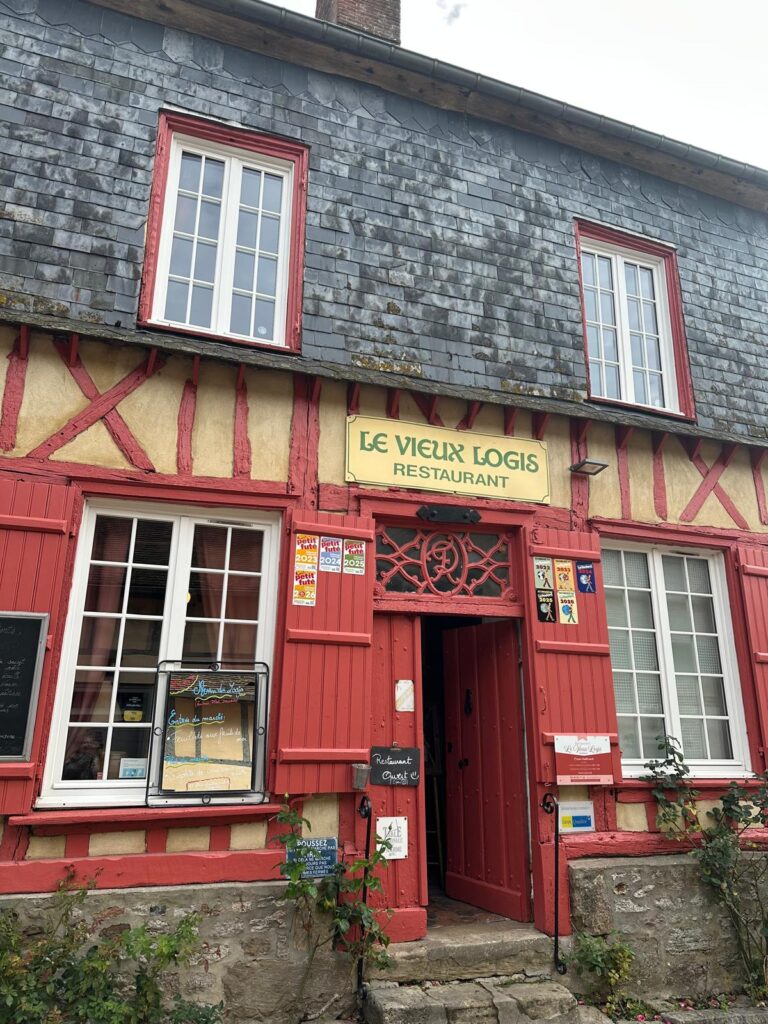 Le Vieux Logis, Gerberoy
Tucked into the cobbled heart of Gerberoy, officially one of the most beautiful villages in France, Le Vieux Logis feels less like a restaurant and more like stepping back several centuries. Its rustic dining room sets the scene before a single plate arrives. The kitchen leans proudly on fresh, local produce, and it shows. Traditional French cooking is given a modern touch, with generous portions and honest flavours that let the ingredients speak.
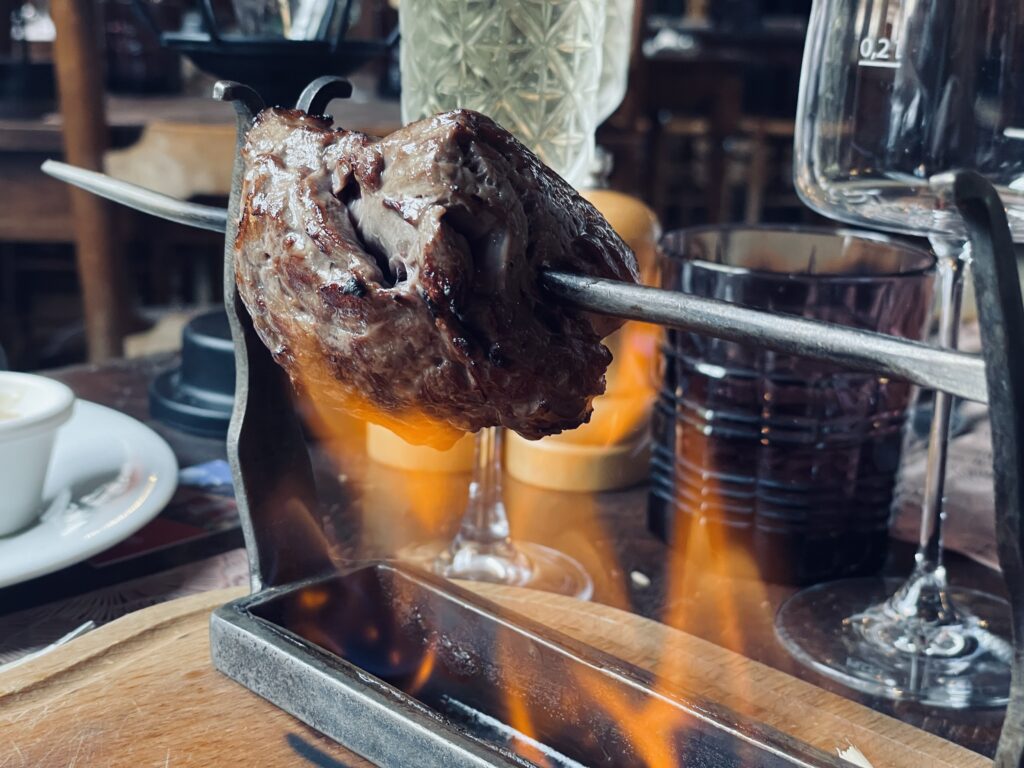
The house speciality, a medieval-style barbecue, is pure theatre and worth the trip alone. That’s what I had, and it was amazing.
The food is incredible and is a must visit.
Service is warm and unhurried, exactly as it should be in a village where time seems to slow down. Lunch here pairs perfectly with an afternoon wandering the rose-filled lanes and the celebrated Henri Le Sidaner gardens, just a few steps away. For travellers from Northern Ireland, Gerberoy is an easy detour from Paris Beauvais Airport, about a half-hour drive away. Book ahead in summer, especially during June’s rose festival, when the village fills quickly.
Le Vieux Logis is simply rustic charm done properly: a meal that tastes of the region and a setting you will remember long after the final coffee.
Highly recommended.
 Food and drink
Beauvais sits in historic Picardy, and its local cooking is that of northern France: hearty, dairy-rich and built on pork, leeks, apples and cider rather than the cuisine of the south.
Genuinely regional: the ficelle picarde, a pancake rolled around ham and mushrooms and baked in a creamy sauce, is the dish most often presented as a Picard speciality. Leek tarts (flamiche) also belong to the wider northern French tradition. Remembering these are regional dishes of Picardy rather than something unique to Beauvais.
Common across France: crêpes, galettes, steak-frites and patisserie are widely available but are not local specialities.
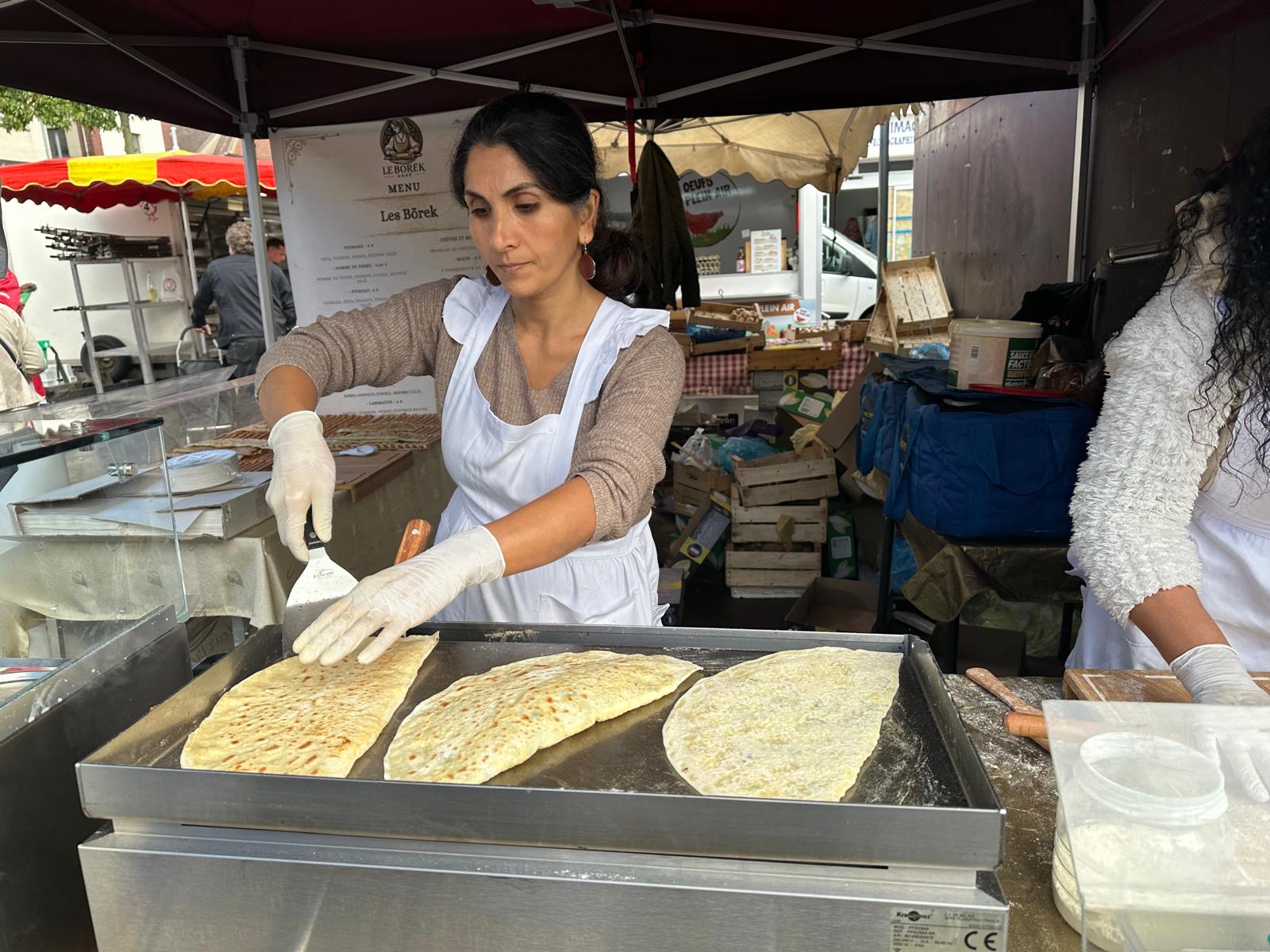
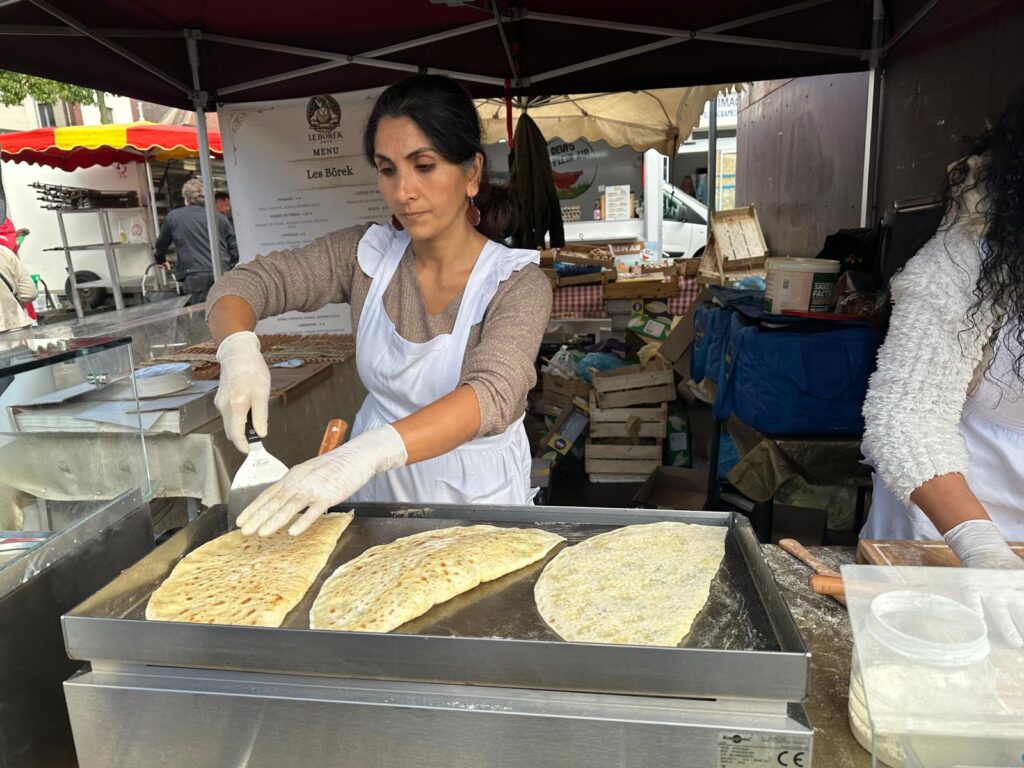
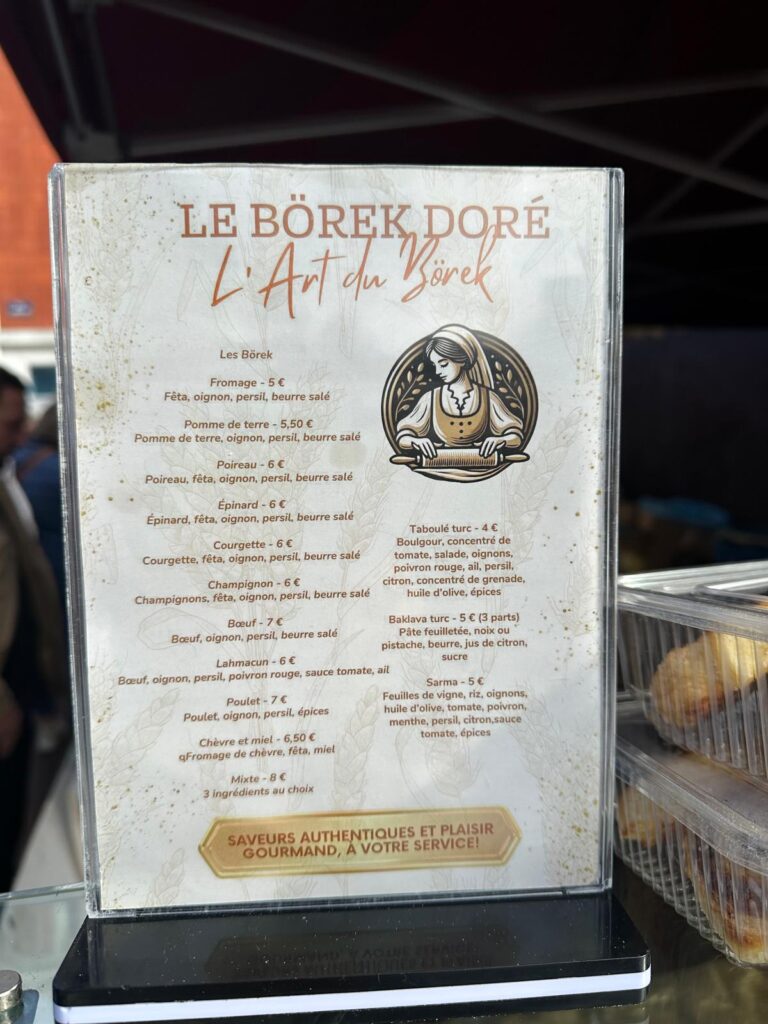
Check out a börek; it’s a savoury pastry from Turkey and the Balkans. It’s made from very thin sheets of dough called yufka, or filo, layered or rolled around a filling, and then baked or sometimes fried.
Common fillings
- white cheese such as feta, with herbs
- spinach and cheese
- spiced minced lamb or beef
- potato
Where to look:
- The Wednesday and Saturday market on the Place des Halles is the best single place to see regional produce.[15]
- Le Producteur Local, rue Louvet, between the Place Jeanne-Hachette and the market square: a cooperative shop run by about 30 producers selling food from within about 150 km of Beauvais. The tourist office lists it as open daily 09:00–19:00.
- O Bistrot, in the countryside about five minutes’ drive from Beauvais: a Bistrot de Pays that lists ficelle picarde and homemade terrines among its specialities, with set menus listed from €24. It is outside the centre, so you will need a car or taxi.
Getting around Beauvais
The historic centre is compact enough to walk. Beauvais station is about 400 m from the town centre, and its tracks are reached by an underpass. The cathedral, MUDO and the Quadrilatère sit next to each other, and the market squares are a short walk away.
Buses: the local Corolis network serves the station, the centre, the airport (line 6) and the Maladrerie (line 4 and Chrono 2). Sunday services are reduced; on Sundays only Chrono 2 serves the Maladrerie.
Station ticket office hours (at the time of research): Monday–Friday 05:00–20:05, Saturday 07:00–18:25, Sundays and public holidays 09:00–18:05. Ticket machines are also available.
Bikes: a bike-hire operator, Beauvélo, is listed at the station.
Taxis: useful for Gerberoy, out-of-town restaurants and early flights. Book ahead for early mornings and Sundays.
Understanding Paris–Beauvais Airport
The airport is not in Paris, and it is not in central Beauvais. Paris–Beauvais Airport (code BVA) stands on the Route de l’Aéroport in Tillé, a commune of the Oise department, about 2 km north-east of Beauvais and about 80 km north of Paris. The “Paris” in its name reflects its role as a low-cost gateway to the Paris region, not its location. It has two terminals, T1 and T2, a short walk apart; check which one your airline uses.
Bus 6 into Beauvais: the Paris tourist office lists a fare of €2 per journey, a departure about every 30 minutes and a separate early-morning and late-evening shuttle for airport hotels.[4] Check the current fare and first and last buses with Corolis before relying on it, especially for late arrivals.
Airport essentials
- Check your terminal and the exact bus stop before travelling; buses stop between and in front of the terminals.[4]
- The Paris tourist office advises taking a shuttle from Paris at least 3 hrs 30 min before your flight.
- Allow extra time for the EU Entry/Exit System (EES) on departure: FCDO warns that biometric checks may add time before boarding.
- Assistance for passengers with reduced mobility should be requested at least 48 hours in advance through the airport.
Where to stay
Area | Best for | Trade-offs |
Around the cathedral and Place Jeanne-Hachette | Sightseeing on foot, evening meals, market mornings | Choice is limited compared with a big city; book early for festival weekends |
Near the railway station | Day trips by rail, late arrivals by train | About 400 m from the centre, so still walkable; less atmosphere[5] |
Beside the airport | Early-morning flights, late arrivals | No sightseeing on the doorstep; you rely on bus 6 or taxis to reach town |
For early flights, the Paris tourist office lists the ibis budget Beauvais Aéroport as the closest hotel, about 0.6 km from the terminals and walkable. It also lists the ibis Beauvais Aéroport, about five minutes away by car, and The Originals City, City Hôtel, about 15 minutes’ walk.[4] Confirm current operation, prices and any shuttle directly with the hotel.
Prices and availability rise around the Fêtes Jeanne Hachette in late June and on European Heritage Days in September.
Accessibility
Official information is good for some sites and patchy for others. Where it is incomplete, contact the venue directly.
- Cathedral: the step-free entrance is not the main portal. Use the Gothic door immediately to the left of the south portal, ring the call button with the accessibility symbol, and staff will open it; a wheelchair-accessible lift leads into the visitor area. Call +33 (0)3 44 48 11 60 to check conditions on the day.
- MUDO: a lift is listed. A 2024 tourist-office listing stated that temporary exhibition rooms were not accessible to people with reduced mobility, so ask which areas you can reach.
- Maladrerie Saint-Lazare: holds the national Tourisme & Handicap label for hearing, mental, motor and visual impairments. It provides hearing loops, directional beacons for visually impaired visitors, tactile booklets and 12 accessible parking spaces.
- Tourist office: Tourisme & Handicap labelled since 2008, with automatic doors. Its entrance is on a cobbled pedestrian street.
- Railway station: the tracks are reached by an underpass. Check assistance services and real-time lift status on the TER Hauts-de-France station page before travelling.
- Airport: request assistance at least 48 hours in advance. Accessible spaces are provided in the P1 car park and the drop-off zone.
- On foot: expect some cobbles in pedestrian streets and uneven historic floors in the cathedral and Basse-Œuvre. The centre is fairly compact, which helps visitors with limited mobility pace a day.
Families: the clock automata are popular with children, and MUDO provides a children’s area and family activities. Pushchairs are easiest on the paved squares rather than cobbled lanes.
Practical travel advice
- Entry (British passports): France applies Schengen rules. Your passport must have been issued less than 10 years before arrival and be valid for at least three months after you leave. Visa-free stays are limited to 90 days in any 180.
- EES: the EU Entry/Exit System is in operation. You may be asked to register fingerprints and a photo at the border, and you should allow extra time on departure.
- Irish passport holders are EU citizens and are not subject to these third-country rules; check the Department of Foreign Affairs for your own advice.
- Travel advice: FCDO advice for France was last updated on 11 August 2026 and showed as still current on 12 October 2026. Read it before you go.
- Insurance: FCDO recommends travel insurance covering your itinerary and emergencies.
- Emergencies: the European emergency number is 112.
- Tourist office: 1 rue Beauregard; +33 (0)3 44 15 30 30; contact@visitbeauvais.fr.
The best time to visit
Beauvais has a mild, damp climate. Météo-France normals for the Beauvais-Tillé station (1991–2020) give an average annual minimum of 5.2°C and maximum of 15.1°C, with precipitation on about 130 days a year.Pack a waterproof in any season.
Season | Advantages | Drawbacks |
Spring (April–May) | Cathedral moves to all-day opening on 1 April; Maladrerie gardens reopen; extra clock shows begin | Changeable weather |
Summer (June–August) | Fêtes Jeanne Hachette on the last weekend of June; longest days; sound-and-light shows on the cathedral in summer (2026 edition unconfirmed at the time of research) | Busiest period; hotels fill around festivals |
Autumn (September–October) | European Heritage Days in September, when workshops such as the tapestry manufactory open;[28] quieter streets | Maladrerie open season ends in early October |
Late autumn and winter (November–March) | Fewer visitors; seasonal sound-and-light shows have also been staged at the end of the year | Cathedral closes 12:15–14:00; short days; Maladrerie closed December–March |
Events (verified dates only): the 554th Fêtes Jeanne Hachette took place on 27–28 June 2026; the festival is traditionally held on the last weekend of June. The Maladrerie’s potters’ and ceramicists’ fair is scheduled for 28–29 November 2026. Annual events can change dates or formats, and 2027 dates were not published at the time of research. Check with the tourist office.
Responsible travel
- In the cathedral: keep voices low, stay out of areas reserved for worship and follow staff directions during services. Dress modestly.
- Photography: be discreet during services, avoid photographing worshippers, and respect any signs restricting photography in exhibitions.
- At the Maladrerie: it is a heritage site, not a public park; respect its rules on picnics, bikes and ball games.
- Support local businesses: cooperative shops such as Le Producteur Local return income directly to nearby producers.
- Residents: much of central Beauvais is residential. Keep noise down when returning to accommodation late.
- Lower-impact travel: combine the TER and bus 6 rather than taking a taxi from Paris; the train-and-bus route is also the cheaper option.
Final verdict: who should visit Beauvais?
Beauvais rewards travellers who enjoy architecture, history and craft, and who are content with one exceptional monument rather than a long list of sights. It suits a weekend from Northern Ireland via Dublin or Belfast, a day trip from Paris, or a night before or after a Beauvais flight.
Go for the cathedral, stay for the clock show and the free museums, and plan your airport timings with care.
Information-verification statement
This guide was researched on 13 October 2026 using official sources wherever available: the cathedral’s managing association, the Paris and Beauvais tourist offices, TER Hauts-de-France, the Maladrerie, the French Ministry of Culture, the Mobilier national, Météo-France and the UK Foreign, Commonwealth & Development Office. The writer has visited Beauvais for this article;
