

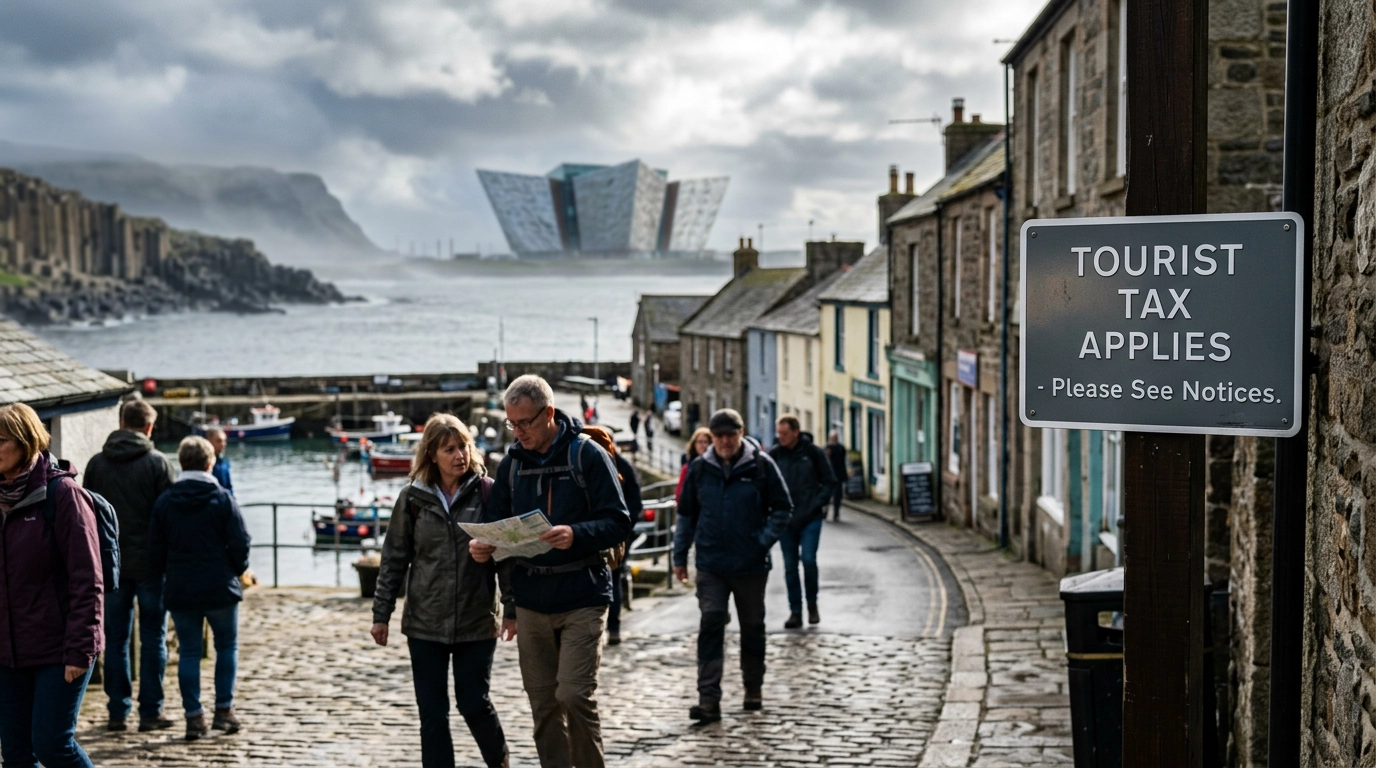
Tourist Taxes Are Spreading Across the UK — Could Northern Ireland Be Next?
 Tourist Taxes Are Spreading Across the UK — Could Northern Ireland Be Next?
If you’re planning a city break in England next year, don’t be surprised if your hotel bill comes with a small extra line item. Plans confirmed this week give mayors across England the power to introduce an “Overnight Visitor Levy” — a charge on tourists staying in paid accommodation, with the revenue reinvested locally. It’s a move that brings England into line with a growing number of destinations across the UK, Europe and beyond, and it raises an interesting question for travellers heading to Northern Ireland: could a similar tax be coming here too?
What’s Actually Being Proposed
Under the new English scheme, local mayors — not central government — will decide whether to introduce the levy, and if so, how much to charge.
Crucially, the fee will be calculated as a percentage of the accommodation cost rather than a flat nightly rate, a design choice intended to protect budget travellers and keep cheaper stays proportionately cheap. There’s technically no upper cap, though Whitehall insiders expect mayors to keep rates modest to avoid deterring visitors.
The policy, first floated under Sir Keir Starmer’s government and now being rolled out under Andy Burnham, fits into a broader devolution agenda: giving city-region leaders more fiscal tools to fund local priorities.
Manchester already has a taster of this in action — its £1-per-room-per-night City Visitor Charge, introduced in 2023, funds initiatives to attract more visitors to the city. London could be next in line for a much larger version: analysis by Central London Forward suggests a 3% levy across the capital’s boroughs could raise more than £350m a year, and Mayor Sadiq Khan is a vocal supporter.
Not everyone is cheering.
UK Hospitality has warned that added charges could push up the cost of already expensive breaks at a time when household budgets remain squeezed, potentially denting the UK’s competitiveness against European destinations and discouraging domestic tourism, particularly among families and younger travellers.
The Wider UK Picture
England is, in truth, playing catch-up. Scotland already permits local authorities to levy a visitor charge, and Edinburgh became the first city there to do so in July, adding 5% to overnight accommodation costs (capped at five nights to protect longer-stay visitors). Glasgow will follow in January 2027 with its own 5% levy. Wales, too, has a scheme in the pipeline: a capped charge of £1.30 per person per night, due to launch next April. Across the world, cities from Amsterdam to Rome to New York have long used similar charges to fund infrastructure, cultural preservation and tourism management — so the principle is well established internationally.
So What About Northern Ireland?
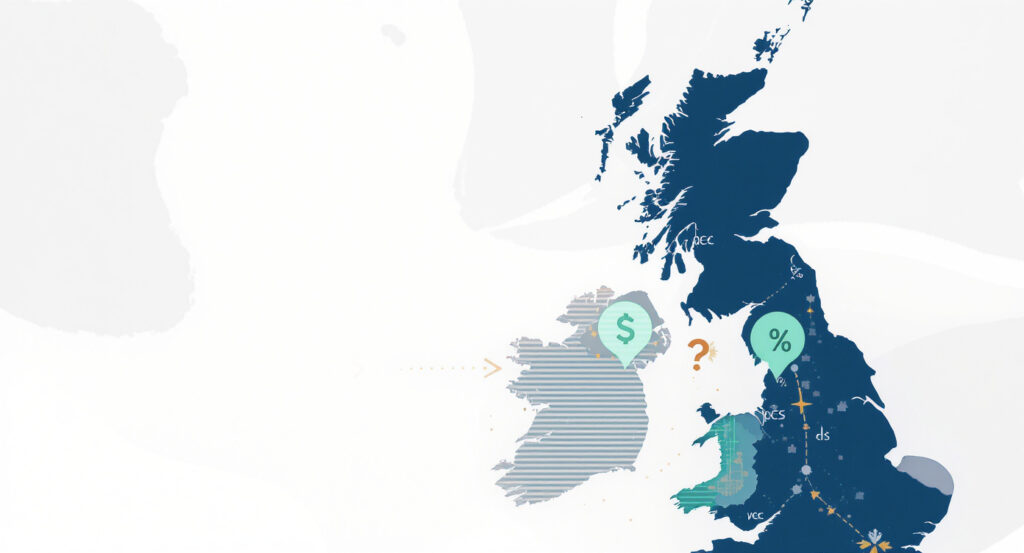 This is where things get interesting for travellers eyeing Belfast, the Causeway Coast or the Mourne Mountains.
As things stand, Northern Ireland has no tourist tax, and there is no active legislative proposal before the Assembly at Stormont to introduce one. But several factors suggest the conversation may be closer than it seems.
First, there’s political and fiscal logic. Devolved and local governments across these islands are increasingly viewing visitor levies as a relatively painless way to raise ring-fenced revenue for tourism infrastructure, without touching general taxation. With Scotland and Wales now committed and England moving in the same direction, Northern Ireland risks becoming a policy outlier — and outliers eventually attract scrutiny, especially from councils facing budget pressures.
Second, Northern Ireland’s tourism sector has grown significantly in the past decade, driven by Game of Thrones tourism, the Titanic Quarter, and the Causeway Coastal Route. Growing visitor numbers strain local infrastructure — public toilets, footpaths, waste management, transport — exactly the kind of costs a modest levy is designed to offset elsewhere.
Third, there’s the constitutional wrinkle. Unlike England’s mayoral model, Northern Ireland doesn’t have directly elected city-region mayors with equivalent fiscal powers, and any new tax-raising power would likely need Assembly legislation and possibly Treasury sign-off given Northern Ireland’s unique fiscal arrangements. That’s a slower, more politically sensitive process than a ministerial announcement in Westminster.
Fourth, there is a genuine competitiveness argument specific to the island of Ireland. The Republic of Ireland does not currently impose an overnight visitor levy either, and Northern Ireland markets itself heavily on cross-border touring routes. Introducing a tax unilaterally could put Belfast and the north coast at a pricing disadvantage compared with Dublin, Galway or Kerry — a factor that would weigh heavily with Stormont’s Department for the Economy and Tourism NI.
The Bottom Line for Travellers
For now, a trip to Northern Ireland remains levy-free, and there’s no indication that will change imminently. But with Edinburgh, Glasgow, Cardiff, and soon several English cities charging overnight visitors, political and fiscal pressure for Belfast to follow suit will likely grow. Anyone planning a Northern Ireland holiday in the next year or two should enjoy the tax-free status quo — it may not last indefinitely as devolved and local governments across the UK continue reaching for the same revenue leve
Tim Hedgley
