

 1. Tuck a clove of garlic in your suitcase
Rooted in centuries-old Balkan folk traditions, garlic has long been seen as a powerful protector against the ‘evil eye’ and negative energy. It’s believed that slipping a clove of garlic into your suitcase can help guard against bad luck on your journey. If a traveller passes through border control without delays or complications, tradition suggests it may be thanks to that humble clove doing its job in their luggage!
Celebrity psychic Inbaal Honigman adds: “The superstition of garlic spans a multitude of regions and situations, and it is most often used as an amulet to ward off evil. From repelling vampires to deflecting the evil eye, the magical properties of garlic are extolled in Bosnia and Herzegovina, Italy, Greece, and as far away as China. When travelling over water, garlic is even said to protect from drowning.”
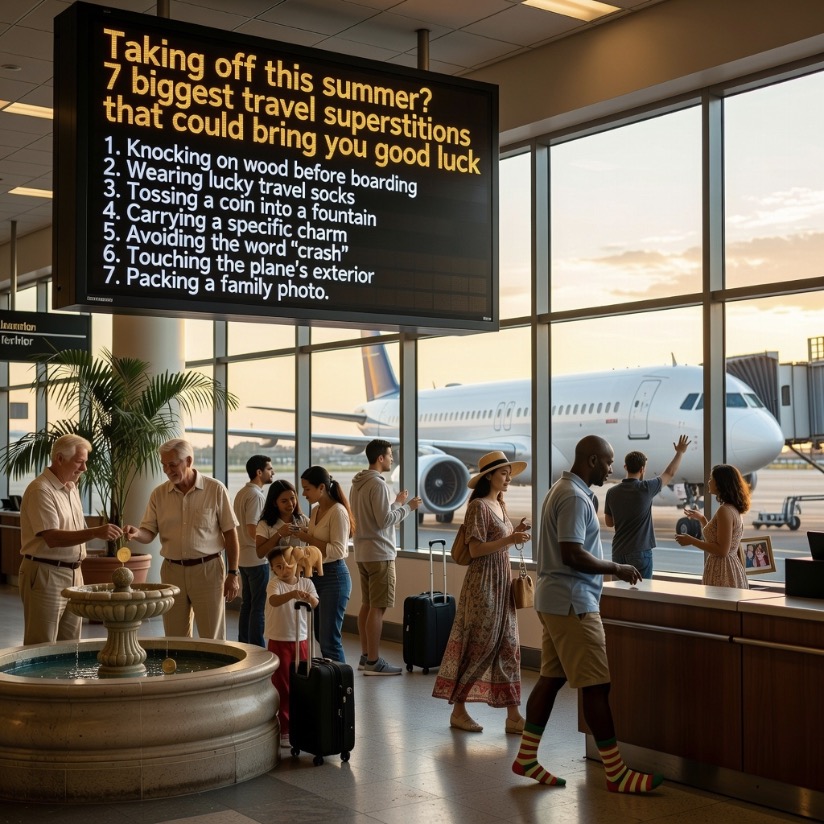
2. Touch the outside of the plane before boarding
Fear of flying affects up to 40% of people around the world. And a small gesture like tapping the plane’s fuselage right before boarding can become a meaningful ritual for many – a simple act believed to bless the flight and greet the aircraft before take-off. It symbolises a moment of connection between man and machine, which could help anxious flyers feel a greater sense of control. Many veterans may remember tapping aircraft during military flights in times of conflict, which is the likely origin for this superstition.
3. Board the plane with your right foot first
The way you step onto a plane matters more than you might think. Rooted in ancient maritime customs and ancient beliefs, stepping aboard with the right foot is believed to set the tone for the entire journey – quite literally starting the trip ‘on the right foot’. For some travellers, a brief, conscious pause at the aircraft door is also used to symbolically welcome good energy and calm nerves.
Inbaal says: “Ancient Greeks and Romans believed the right side was auspicious and associated with positive energy, so beginning anything with the right foot was seen as bringing better fortune. Even in Islamic, Portuguese and Hindu traditions, starting things on the right side is believed to lead to more favourable outcomes.”
4. Spill water behind the traveller before they leave
In parts of the Middle East and the Balkans, a surprisingly refreshing farewell ritual sees travellers sent off with a splash of water spilled behind them. While some regions stick to a gentle sprinkling, others toss a full bucket or pitcher of water directly behind the traveller or their vehicle as they set off.
Psychic Inbaal adds: “The superstition is rooted in the idea of wishing for a journey that flows as smoothly and effortlessly as moving water. It mimics the movement of the tides – just as water drifts away from the shore and then comes safely back, it is believed the traveller will journey away from home and then return in peace.”
5. Avoid the numbers 4 (China), 13 (US) and 17 (Italy)
Certain numbers are believed to carry bad energy across different cultures, so much so that they’ve quietly disappeared from hotel floors, airline seat rows and even room numbers around the world. The most widely recognised is 13, long considered unlucky in much of the West.
Inbaal explains: “The number 13 is seen as a disruptor, a break from the harmonious order of things. The 13th moon in a year falls outside the expected 12, the 13th guest at the last supper signified betrayal and the 13th guest in Valhalla was the disruptive god Loki.”
In China, it’s the number 4 that raises concern as it sounds almost identical to the word for ‘death’ in Mandarin. Meanwhile in Italy, the number 17 is feared due to its Roman numeral representation, XVII, which can be rearranged to spell VIXI, a Latin phrase meaning ‘I have lived’ – a reference to death and the end of life.
6. Sit on your luggage before a trip
A famous Slavic superstition is to sit on your luggage for a minute or two before leaving the house. The brief pause is thought to help travellers gather their thoughts and mentally reset before the journey begins. Traditionally, it was also believed that by lingering, a traveller could confuse any lurking evil spirits, creating the impression that no departure was taking place at all.
Inbaal adds: “This silent, momentary pause is a hangover from Pagan times and is often linked to the household spirit. It was believed that taking a moment before leaving showed respect for the spirit that protected the home, while rushing out abruptly risked angering it.”
7. Put the broom down after saying goodbye
In many cultures, sweeping isn’t just a household chore. It carries symbolic weight tied to clearing, cutting ties and ‘removing’ energy from a space. In regions including the Caribbean, Latin America, Ukraine and beyond, the act of sweeping straight after someone leaves the home is considered unlucky, as sweeping too soon could symbolically sweep away their luck, or even their wellbeing or safe return.
Notes to editors:
Would you like to republish this study? We kindly ask that you credit Casino Khajana with a link to https://casinokhajana.com/in. These linked credits allow us to keep supplying you with future content that you may find useful!
If
