

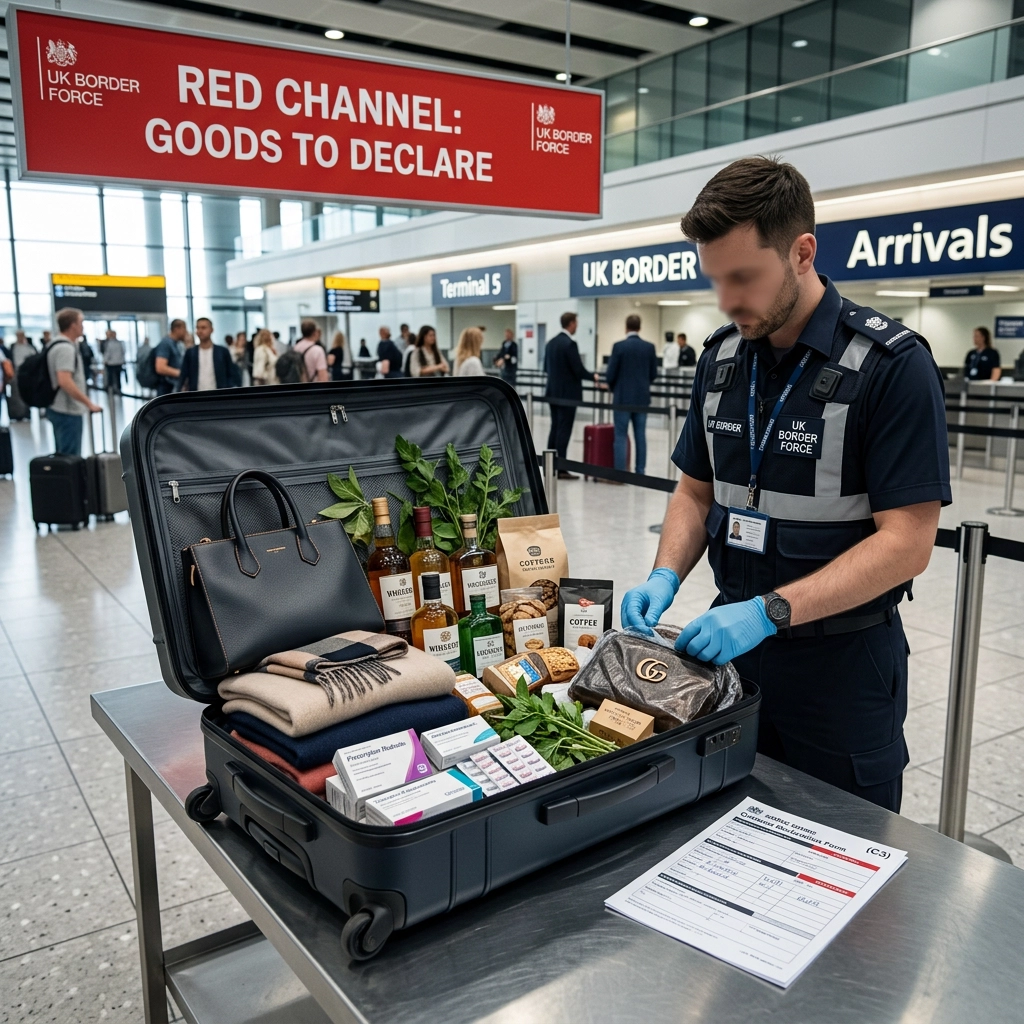
Failing to declare high-value goods and luxury purchases
A big misconception Brits have is that they don’t have to declare high-value, luxury purchases; well, it turns out you do!
- Whether it’s a designer handbag or premium clothing, if the amount spent is over £390, the items need to be declared either 5 days before entering the UK or via the red channel on arrival.
“When it comes to high-value purchases, if they were made in the EU you may be able to avoid customs duty tax with the correct evidence. If the total value of all items is less than £1,000, suitable evidence can be packaging or labels, or additional documentation, proving that the item was made or grown in the EU. If the total value is over £1,000, suitable evidence could be invoices or documentation from the seller detailing the item you have bought, the place and date of purchase, and the ‘statement on origin’,” Asad, the Director of CargoForce, says.
“Failure to declare your luxury purchases can result in fines of up to £2,500 as well as seizure of goods, with the potential for destruction or disposal. In some extreme cases, travellers may even face prosecution. In some cases, failure to follow customs requirements could also impact any related insurance claims, depending on policy terms.”
Bringing restricted food, plant, or animal products across borders
Holidaymakers heading home with food, plants, or animal products could also run into trouble at the border. There are many restrictions and guidelines Brits must adhere to, and if ignored, a hefty £5,000 fine and potential prosecution could be coming your way!
“A lot of these guidelines are dependent on which country holidaymakers are travelling home from. For example, if you are returning from Spain, as Spain is within the EU, restrictions are lighter. Whereas returning from a non-EU country, there are much tighter restrictions around crossing the UK border with meat, dairy, fish, and other animal products. Similarly, for Brits wanting to return with plant products, if they are returning from a non-EU country, they will need to have obtained a plant health certificate from the plant health authorities in the country they are leaving.”
“In the case that a traveller is detained for questioning, has goods confiscated, and receives a fine, many UK travel insurance policies do not extend their cover for these circumstances as they are deemed as prohibited and illegal actions.”
Travelling with prescription medication without the required paperwork
Whilst on holiday, everyone hopes to have a fun, problem-free time; however, this can’t always be the case and unexpected illnesses can arise at any time.
Asad advises: “If your health acts up whilst abroad and you are prescribed medication, before returning home you will need to contact the Drug and Firearms Licensing Unit to ensure a smooth entry back into the UK with your medication.”
“If travellers fail to follow UK customs regulations, they will not only have to face delays, but their medication could be seized or destroyed, voiding travel insurance if the traveller falls ill.”
Purchasing counterfeit goods abroad
Everyone loves a bargain, especially when it comes to holidays, but purchasing counterfeit goods can leave you with more than you bargained for!
Asad warns: “Counterfeit goods are often poor quality, faulty, and may not comply with the UK’s safety standards, risking injury or illness and invalidating travel insurance claims. Because of this, UK customs can seize counterfeit goods and if the goods are being brought into the UK with the intention to be sold on, criminal-trafficking charges can be handed out to those responsible.”
Exceeding duty-free allowances for alcohol and tobacco
For those looking to take advantage of the airport duty-free, this is a great opportunity to stock up on some of your favourite products, as long as they are for personal use, being transported by yourself, and don’t exceed the allowance.
“Since leaving the EU, the UK has significantly increased duty-free limits for arriving passengers, including 42L of beer, 18L of wine, 4L of spirits, and 200 cigarettes or 250g of smoking tobacco. But regulations must be followed as anyone caught smuggling goods over the allowed limit could again face fines, confiscation, and prosecution as well as impacting travel insurance due to breaking customs laws.”
Failing to accurately declare items when shipping internationally
When shipping goods internationally, whether that be to family and friends or commercially, several UK customs procedures must be met; even one inaccuracy could land you in dangerous territory with no insurance cover.
“Although mistakes happen, HMRC and customs do not take inaccurate paperwork lightly, from undervaluation to undeclared goods. The exporter of the goods could land themselves financial penalties such as repayments and interest, delays, inspections, seizure of goods, void travel insurance, and prosecution in the most serious cases.”
Check the fine details before you jet off
Asad is urging holidaymakers this summer to check customs and re-entry regulations, as well as their travel insurance fine print, before sunseeking this summer. Taking the time to check could save your holiday memories from being ruined.
“Most mistakes can be harmless, but for those few that break the rules, the consequences can be serious and your travel insurance may become void,” he warns.
As millions of Brits plan to take a holiday this summer, holidaymakers are being warned that being unaware of regulations when re-entering the country could lead to serious complications if questioned by UK customs agents at the airport.
http://www.cargoforce.com
